AI-Driven Personalization Engines: Transforming User Journeys in Web &
Published on: 10 Jun 2026
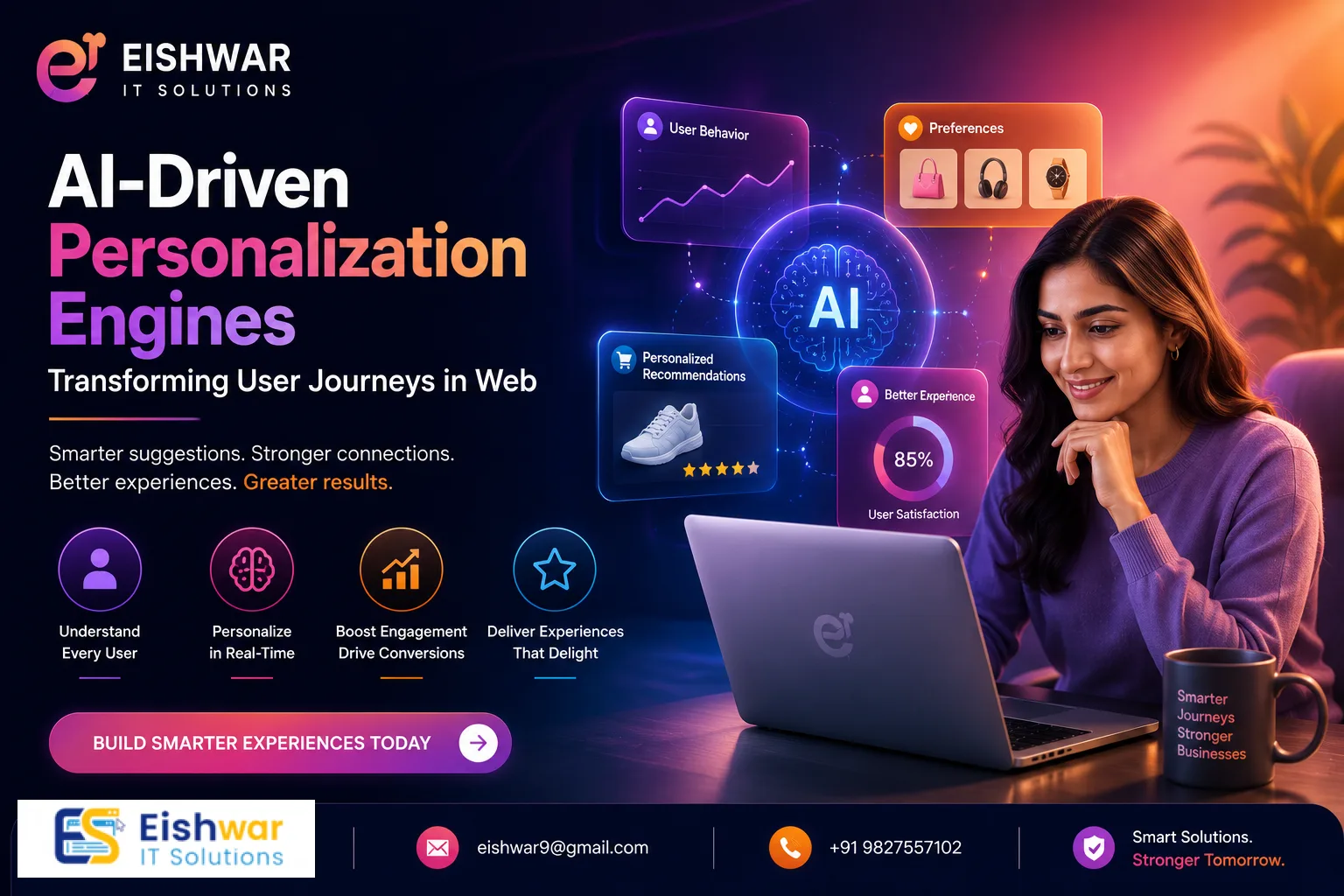
AI-Driven Personalization Engines: Transforming User Journeys in Web & App Development
Introduction
Imagine visiting a website that instantly knows your preferences—showing you products you’ll love, content you’ll read, and offers you can’t resist. That’s the power of AI-driven personalization engines. For business owners, marketers, and professionals in India, these engines are no longer a luxury; they’re a necessity. In this post, we’ll explore how AI personalization is reshaping web and app development, with actionable tips to boost engagement and conversions. As digital competition intensifies, personalization has become the key differentiator. A recent study by McKinsey found that personalization can reduce acquisition costs by as much as 50%, lift revenues by 5-15%, and increase marketing spend efficiency by 10-30%. For Indian businesses, where the digital audience is diverse and rapidly growing, leveraging AI for personalization is not just about keeping up—it’s about leading the market.
Learn more about our Website services
Main Section 1: What Are AI-Driven Personalization Engines?
AI-driven personalization engines use machine learning algorithms to analyze user behavior, preferences, and demographics. They deliver tailored experiences in real-time, from personalized product recommendations to dynamic website content. Unlike traditional rule-based personalization, AI adapts continuously, learning from every click and interaction. For example, an e-commerce app can show different homepage banners to a first-time visitor versus a loyal customer. A news website can prioritize articles based on reading history. These engines power everything from Netflix’s “Recommended for You” to Amazon’s “Customers also bought.”
In India, where digital adoption is soaring, businesses like Flipkart and Zomato already use AI personalization to stand out. Small and medium enterprises can now access similar technology through affordable SaaS platforms like Dynamic Yield, Optimizely, or even Google’s Recommendations AI. The underlying technology often involves collaborative filtering, content-based filtering, and deep learning models. For instance, collaborative filtering analyzes patterns among users to suggest items that similar users liked, while content-based filtering recommends items based on a user’s past preferences. Advanced engines combine both approaches, known as hybrid recommendation systems, to deliver highly accurate results. Practical tip: When selecting a platform, consider factors like ease of integration, scalability, and support for Indian languages to better serve local audiences.
Main Section 2: Key Benefits for Web & App Development
Integrating AI personalization into your web or app development strategy offers tangible advantages:
- Increased Engagement: Personalized content keeps users on your site longer. Studies show a 30% boost in engagement rates. For example, a travel app that suggests destinations based on past trips and current weather can increase session duration by 25%.
- Higher Conversion Rates: Tailored recommendations lead to more purchases. Personalized CTAs can improve conversions by 202%. A/B tests by e-commerce sites reveal that personalized product recommendations account for up to 35% of total sales.
- Improved Customer Loyalty: When users feel understood, they return. Personalization can increase repeat visits by 40%. Loyalty programs integrated with AI can offer rewards based on individual behavior, deepening the relationship.
- Better User Experience: AI reduces friction by showing relevant information, minimizing search time. For instance, a news app that curates articles based on reading history saves users from scrolling through irrelevant content.
- Data-Driven Insights: Personalization engines provide analytics to refine marketing strategies. You can identify which segments respond best to certain offers, enabling more targeted campaigns.
For Indian businesses, this means competing with global giants while understanding local nuances like regional languages and festivals. A practical example: An online grocery store in Bangalore could personalize the homepage during Diwali to show sweets and festive decorations, while during monsoon, it might highlight umbrellas and raincoats. Such contextual personalization can boost seasonal sales by up to 20%.
👉 Don't wait for the perfect moment; turn your vision into reality today.
Free ConsultationMain Section 3: How to Implement AI Personalization in Your Project
Ready to get started? Follow these steps:
- Define Your Goals: Are you aiming for more sales, longer sessions, or higher sign-ups? Clear objectives guide your approach. For example, if your goal is to increase newsletter subscriptions, you can personalize the sign-up prompt based on user behavior.
- Collect Quality Data: Use analytics tools to gather behavioral data, purchase history, and user feedback. Ensure compliance with Indian data privacy laws, such as the Digital Personal Data Protection Act, 2023. Tools like Google Analytics, Mixpanel, or custom event tracking can help.
- Choose the Right Platform: Options like Dynamic Yield, Optimizely, or Google’s Recommendations AI offer scalable solutions. For custom development, consider open-source frameworks like TensorFlow or PyTorch. Start with a free tier or trial to test the waters.
- Start Small: Implement personalization on one page or feature first. For instance, personalize the product recommendation section on your homepage. Test and optimize before scaling to other areas like email campaigns or push notifications.
- Monitor and Iterate: AI improves with data. Regularly review performance metrics such as click-through rates, conversion rates, and user satisfaction scores. Use A/B testing to compare personalized vs. non-personalized versions. Adjust algorithms based on insights.
Practical example: A Mumbai-based travel portal could show destination recommendations based on past bookings and current weather, increasing booking likelihood. They could also personalize email offers for weekend getaways based on user location and travel history. Implementation tip: Use server-side personalization for faster load times, as client-side scripts can slow down the page.
Expert Tips
- Focus on Privacy: Always ask for user consent and be transparent about data usage. Indian users value trust. Implement clear cookie consent banners and privacy policies. Use anonymization techniques to protect sensitive data.
- Combine AI with Human Touch: Use AI for suggestions, but let users edit preferences manually. For example, allow users to mark interests or block certain categories. This balances automation with control.
- Test Across Devices: Personalization must work seamlessly on mobile, tablet, and desktop. Mobile users, especially in India, expect fast, responsive experiences. Use responsive design and test on various devices and browsers.
- Leverage Local Context: Personalize for Indian festivals (Diwali, Holi, Pongal) and regional languages for deeper connection. For instance, a food delivery app could suggest regional dishes during specific festivals or offer language-specific interfaces.
- Use A/B Testing: Compare personalized vs. non-personalized versions to measure impact. Run tests for at least two weeks to gather statistically significant data. Tools like Google Optimize or VWO can simplify this process.
Common Mistakes
- Over-Personalization: Creepy or too-specific recommendations can scare users. Keep it subtle. For example, avoid showing “We know you bought a pregnancy test” unless the user has opted for such insights. Balance relevance with discretion.
- Ignoring User Control: Always provide an option to opt out or reset personalization. A simple “Reset Recommendations” button can improve user trust. Also, allow users to delete their data if they wish.
- Relying Only on Demographics: Behavioral data is more accurate. Don’t assume based on age or location alone. A 25-year-old in Mumbai might have vastly different interests than a 25-year-old in Delhi. Use a combination of demographic and behavioral data for better results.
- Neglecting Performance: Heavy personalization can slow down your site. Optimize for speed by using caching, lazy loading, and efficient algorithms. A slow site can negate the benefits of personalization, as users may abandon it.
- Copying Competitors: What works for Amazon may not work for your niche. Test your own approach. For example, a niche bookstore might find that personalized author recommendations work better than broad product suggestions. Always tailor strategies to your audience.
Future Trends
AI personalization is evolving rapidly. Here’s what to watch:
👉 Free Website Audit
Get Free Audit- Hyper-Personalization: Using real-time data like location and weather to deliver instant tailored experiences. For instance, a ride-sharing app could offer discounts during rain based on user location and past ride history.
- Voice and Visual Personalization: AI will adapt to voice search and image recognition, personalizing content accordingly. Imagine a fashion app that suggests outfits based on a photo you upload, or a voice assistant that recommends recipes based on your dietary preferences.
- Predictive Personalization: Anticipating user needs before they act, like suggesting a reorder before stock runs out. For example, a grocery app could predict when you’ll run out of milk and send a reminder with a one-click order option.
- Privacy-First AI: New techniques like federated learning will personalize without compromising data security. Federated learning trains AI models on user devices without sending raw data to servers, enhancing privacy. This is particularly relevant for Indian users concerned about data breaches.
- Integration with IoT: Smart devices will feed data into personalization engines, creating seamless omnichannel experiences. For instance, a smart refrigerator could notify your grocery app to restock items, and the app could personalize offers based on your consumption patterns.
Indian businesses that adopt these trends early will gain a competitive edge in the digital landscape. For example, a smart home company in India could use IoT data to personalize energy-saving tips, while a health app could integrate with wearables to offer personalized workout plans.
FAQs
What is an AI-driven personalization engine?
It’s a system that uses machine learning to deliver customized content, products, or experiences to users based on their behavior and preferences, in real time. Examples include recommendation systems on Netflix or Amazon.
How can small businesses in India afford AI personalization?
Many SaaS platforms offer tiered pricing starting at affordable rates, often with free trials. Open-source tools like TensorFlow or Apache Mahout also reduce costs. Start with a basic implementation on a single page and scale as you grow. For example, a small e-commerce store can use Google’s Recommendations AI with a pay-as-you-go model.
👉 Free Homepage Demo
Book DemoDoes AI personalization require a lot of technical expertise?
Not necessarily. Many platforms offer drag-and-drop interfaces and pre-built algorithms that require minimal coding. For custom solutions, you may need a developer, but managed services simplify the process. Platforms like Dynamic Yield provide visual editors for non-technical marketers.
Is user privacy a concern with AI personalization?
Yes, but you can mitigate it by obtaining explicit consent, anonymizing data, and complying with India’s Digital Personal Data Protection Act, 2023. Transparency builds trust. For instance, clearly explain what data is collected and how it’s used in your privacy policy. Also, offer users the ability to delete their data.
How long does it take to see results from AI personalization?
Initial improvements can appear within weeks, but full optimization may take a few months as the AI learns from user interactions. Regular monitoring and A/B testing accelerate results. For example, an e-commerce site might see a 10% increase in click-through rates within the first month, with further gains over time.
Can AI personalization work for B2B websites?
Absolutely. B2B sites can personalize content based on industry, job role, or past downloads, improving lead generation and nurturing. For example, a software company could show different case studies to a CTO versus a marketing manager, increasing relevance and engagement.
What are the best tools for AI personalization in India?
Popular tools include Dynamic Yield, Optimizely, Google Recommendations AI, and Adobe Target. For Indian businesses, consider tools that support regional languages and local payment gateways. Open-source options like TensorFlow offer flexibility for custom solutions. Evaluate based on your budget, technical expertise, and scalability needs.
Conclusion
AI-driven personalization engines are transforming how businesses engage with users, turning generic websites into intelligent, adaptive platforms. By implementing these tools thoughtfully, Indian businesses can boost engagement, conversions, and loyalty. Start small, prioritize privacy, and keep iterating. The future of web and app development is personal—make it yours. Remember, the key is to balance automation with human empathy, ensuring that personalization enhances rather than intrudes on the user experience.
CTA
Ready to integrate AI personalization into your web or app? Contact EishwarITSolution today for a free consultation. Let’s build smarter digital experiences together. Our team of experts can help you choose the right tools, implement strategies, and optimize for success. Don’t let your competitors outpace you—embrace AI personalization now.