
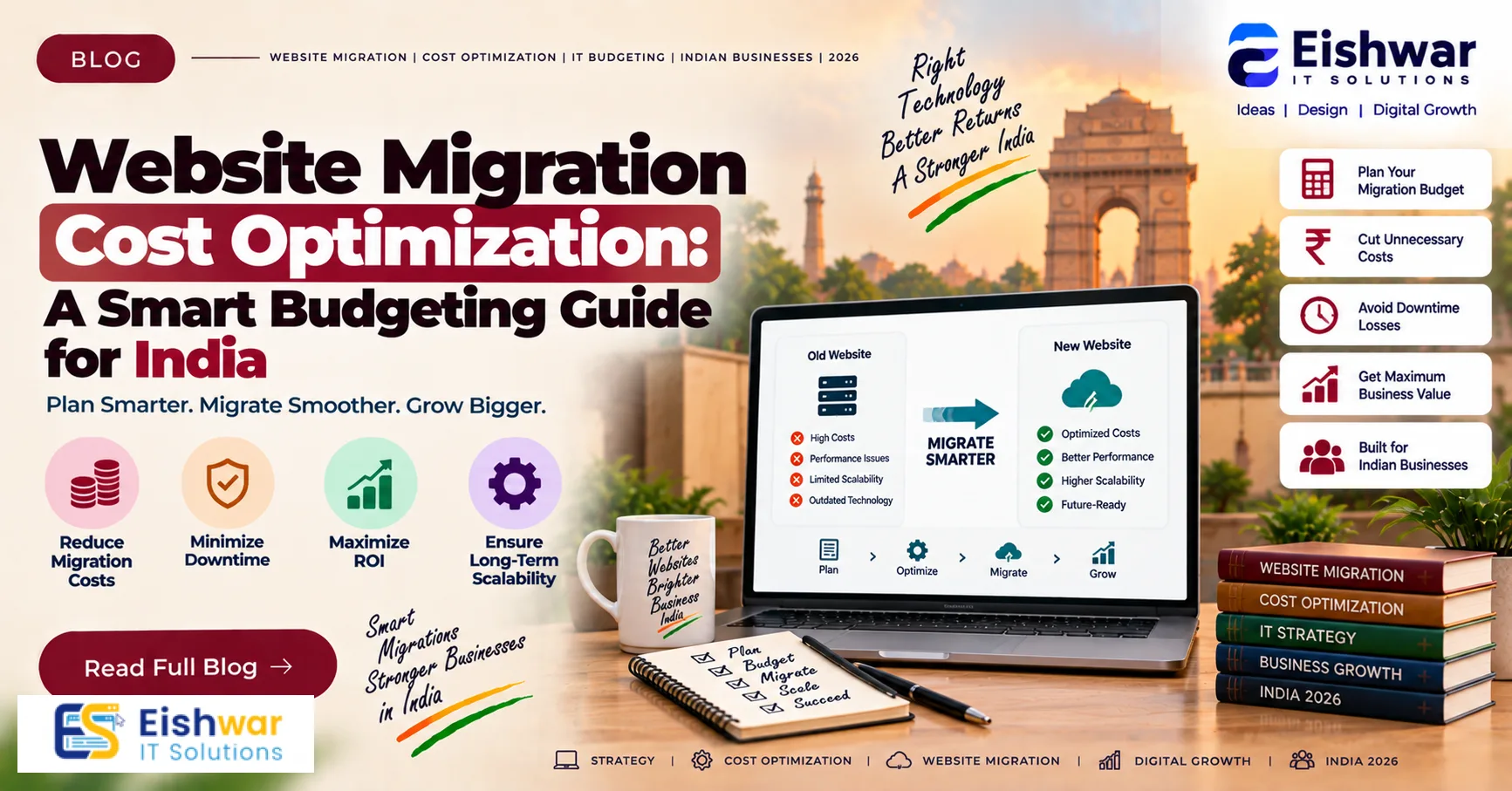
Website Migration Cost Optimization: A Smart Budgeting Guide for India
Published on: 14 Aug 2026
Website Migration Cost Optimization: A Smart Budgeting Guide for India
\n# Website Migration Cost Optimization: A Smart Budgeting Guide for Indian Businesses ## Introduction Moving your website to a new platform, host, or design is a big step. But let's be honest—cost is often the biggest worry. You've probably heard horror stories of projects that blew the budget, dragged on for months, or ended up costing double the original estimate. The good news? With smart planning, you can optimize your website migration costs and get a great result without breaking the bank. In this guide, we'll walk you through practical, actionable strategies to keep your migration budget in check. Whether you're a small business owner in Mumbai or a growing startup in Bengaluru, these tips will help you avoid hidden costs, make smart choices, and ensure your migration delivers real value. Let's dive in. ## Main Section 1: Understanding the True Cost of Website Migration ### The Hidden Costs You Might Not Expect Many businesses think website migration is just about paying a developer to move files. But the true cost involves much more. Let's break down the typical components: - **Discovery and Planning**: This is the groundwork—auditing your current site, setting goals, and mapping out the migration. It's often overlooked but critical. If you skip it, you'll pay later in mistakes and rework. - **Design and Development**: If you're redesigning, this is where the big bucks go. Custom designs, new features, and integrations all add up. - **Data Migration and Testing**: Moving content, databases, and media files. Then testing everything to ensure nothing breaks. This is a major cost area, especially if you have a lot of data. - **SEO Preservation**: Ensuring your rankings and traffic don't drop. This might involve redirects, updating internal links, and monitoring. It's not optional—losing SEO can cost you far more than the migration itself. - **Post-Launch Support**: Bugs, issues, and tweaks after going live. Budget for this—it's inevitable. ### Why Indian Businesses Often Underestimate Costs In India, there's a tendency to look for the cheapest option. But cheap can be expensive in the long run. For example, hiring an inexperienced freelancer might save money upfront, but they may not know how to handle SEO redirects or complex data migrations. You'll end up paying another expert to fix mistakes, or worse, lose your search rankings. Another common mistake is not accounting for the cost of downtime. If your website is down for a day, you lose sales. For an e-commerce store, that could be significant. Even for a lead-generation site, downtime means lost trust and missed opportunities. So, when budgeting, factor in the potential revenue loss during migration and aim for zero downtime. ### The Real ROI of a Well-Planned Migration Think of migration as an investment, not just an expense. A well-planned migration can: - **Improve site speed**: Faster sites rank better and convert more visitors. - **Enhance user experience**: A modern, easy-to-navigate site keeps people on your page longer. - **Reduce maintenance costs**: Newer systems are often cheaper to maintain and more secure. - **Scale with your business**: A flexible platform grows with you, avoiding future costly migrations. When you calculate the ROI, consider these long-term benefits. A slightly higher upfront cost can save you money in the long run. ## Main Section 2: Strategies to Optimize Your Migration Budget ### 1. Start with a Clear Scope and Requirements The biggest budget killer is scope creep. You start with a simple migration, then someone adds a new feature, then another, and suddenly you're over budget. To avoid this: - **List everything you need**: Make a detailed list of must-haves and nice-to-haves. Stick to the must-haves for now. - **Get a fixed quote**: Ask your agency or freelancer for a fixed-price quote based on your requirements. This protects you from unexpected hourly charges. - **Prioritize**: If you can't afford everything, phase it. Launch with the essentials and add extras later. ### 2. Choose the Right Platform and Hosting Your platform choice has a huge impact on cost. For example: - **Open-source CMS like WordPress**: Free to use, but you'll pay for themes, plugins, and developers. Great for most businesses. - **SaaS platforms like Shopify or Wix**: Monthly fees, but less maintenance. Good for e-commerce if you don't want to manage technical stuff. - **Custom development**: The most expensive, but gives you total control. Only worth it if you have unique needs. Similarly, hosting costs vary. Shared hosting is cheap but slow. VPS or dedicated hosting is faster but pricier. Cloud hosting (like AWS or Google Cloud) offers scalability but can be complex. For Indian businesses, consider local hosting providers—they might be cheaper and offer better support in your timezone. ### 3. Leverage Free and Low-Cost Tools You don't need expensive enterprise tools for a small or medium-sized migration. There are plenty of free or affordable options: - **Migration plugins**: For WordPress, tools like Duplicator or All-in-One WP Migration can move your site for free. - **SEO audit tools**: Google Search Console and Bing Webmaster Tools are free and essential for monitoring. - **Testing tools**: Use free website testers like GTmetrix or PageSpeed Insights to check performance. - **Communication**: Use free tools like Slack or Trello for project management. ### 4. Negotiate with Vendors Don't be afraid to negotiate. Indian markets often have room for bargaining. When you get quotes, ask for discounts, especially if you're a long-term client or bundling services. Also, ask for a detailed breakdown—you might find costs you can cut or do yourself. ### 5. Plan for Post-Launch Costs Set aside 10-15% of your total budget for post-launch fixes and improvements. This is not a waste—it's a safety net. You'll likely need to tweak something, fix a bug, or adjust a design element. Having this buffer prevents stress and overspending. ## Main Section 3: Real-World Examples and Case Studies (India-Focused) ### Case Study 1: A Small E-commerce Store in Jaipur A jewelry store with a custom-built website wanted to move to Shopify to reduce maintenance costs. Their initial quote was ₹1.5 lakh. By following the strategies above, they: - **Used a pre-built theme** instead of custom design (saved ₹40,000) - **Migrated their product data themselves** using CSV import (saved ₹15,000) - **Negotiated with the developer** to include SEO redirects in the package (saved ₹10,000) Total cost: ₹85,000. They also cut monthly maintenance from ₹5,000 to ₹2,000 (Shopify's fee). Within a year, they saved over ₹30,000 in maintenance alone. ### Case Study 2: A B2B Service Company in Pune A manufacturing company with a legacy website (10+ years old) needed a complete redesign and migration to WordPress. Their initial budget was ₹3 lakh. They optimized by: - **Doing a content audit** and removing 50% of outdated pages (saved ₹20,000 in development time) - **Using a free SEO plugin** for redirects instead of custom development (saved ₹15,000) - **Phasing the project**—launching with core pages first, then adding features later (saved on cash flow) Final cost: ₹2.2 lakh. They also saw a 40% increase in leads within three months due to better site speed and user experience. ### Key Takeaways from These Examples - **DIY where possible**: If you can handle simple tasks like content entry or data cleanup, do it. - **Be smart about design**: Custom design is nice, but pre-made themes work just as well for most businesses. - **Don't skip SEO**: It's not a cost—it's an investment. Losing rankings is the most expensive mistake you can make. ## Expert Tips 1. **Always create a backup before migrating**. This is non-negotiable. If something goes wrong, you can restore your old site. Use a reliable backup plugin or your hosting provider's backup service. 2. **Use a staging environment**. Test your new site on a staging site before going live. This prevents bugs from affecting your live site and reduces post-launch fix costs. 3. **Monitor your SEO after launch**. Use Google Search Console to track your rankings and traffic. If you see a drop, act fast. Redirect issues or missing pages can be fixed quickly if caught early. 4. **Consider a phased migration**. If your site is large, migrate section by section. This reduces risk and allows you to spread costs over time. 5. **Get everything in writing**. Contracts, quotes, and timelines. This protects you from unexpected costs and disputes. ## Common Mistakes 1. **Choosing the cheapest option without checking quality**. This often leads to higher costs later. Look for value, not just price. 2. **Skipping the planning phase**. Jumping straight to development without a clear plan results in rework and delays. 3. **Ignoring SEO**. Not setting up redirects or not updating internal links can cause a massive drop in traffic, costing you revenue. 4. **Not testing thoroughly**. Going live with broken pages or forms loses customers. Always test on a staging site first. 5. **Forgetting about post-launch support**. You will need it. Budget for it, or you'll be stuck with a broken site and no help. ## Future Trends ### AI-Driven Migration Tools Artificial intelligence is changing the game. AI can automate data mapping, content migration, and even SEO redirects. This reduces manual work and errors, potentially lowering costs. Expect to see more AI-powered migration services in the coming years. ### Cloud-Native Migrations More Indian businesses are moving to cloud platforms like AWS, Azure, and Google Cloud. These offer pay-as-you-go pricing, which can be more cost-effective than traditional hosting. However, they require expertise, so plan accordingly. ### Headless Commerce and JAMstack For e-commerce, headless commerce separates the frontend from the backend, giving you more flexibility and potentially lower costs. JAMstack sites are faster and more secure, which can reduce hosting costs. These are trends to watch. ## FAQs **Q: What is the average cost of a website migration in India?** A: It varies widely. For a small business, a simple migration might cost ₹50,000 to ₹1 lakh. For a larger or more complex site, it can go up to ₹5 lakh or more. It depends on the platform, features, and your requirements. **Q: How can I reduce website migration costs?** A: Start with a clear scope, choose the right platform, use free tools, negotiate with vendors, and consider doing some tasks yourself. Also, don't skip SEO—it's not a cost, it's an investment. **Q: Is it cheaper to migrate to WordPress vs. a custom platform?** A: Generally, yes. WordPress is open-source and has a huge ecosystem of themes and plugins, which reduces development time. Custom platforms require more coding and testing, making them more expensive. **Q: How long does a website migration take?** A: It depends on the complexity. A simple migration can take a few days. A full redesign with data migration might take 4-8 weeks. Plan for extra time for testing and fixes. **Q: What are the biggest hidden costs in website migration?** A: The biggest hidden costs are usually post-launch fixes, SEO recovery (if you lose rankings), and downtime revenue loss. To avoid these, plan thoroughly, test on staging, and set up redirects. **Q: Can I migrate my website myself?** A: If you have technical skills, you can use migration plugins and tools. But for complex sites, it's safer to hire a professional. Mistakes can be costly, especially regarding SEO and data integrity. ## Conclusion Website migration doesn't have to be a budget nightmare. With careful planning, smart choices, and a focus on value, you can optimize your costs and get a website that serves your business well. Remember, the cheapest option isn't always the best—invest in quality where it matters, like SEO and testing. And always keep a buffer for unexpected expenses. By following the strategies in this guide, you'll be well on your way to a successful, cost-effective migration. So, take a deep breath, plan your budget, and make the move with confidence. ## CTA Ready to migrate your website without breaking the bank? Contact EishwarITSolution today for a free consultation and a detailed, transparent cost estimate. Our experts will help you plan a migration that fits your budget and meets your business goals. Visit [eishwar.com](http://eishwar.com) or call us now!CTA
Ready to migrate your website without breaking the bank? Contact EishwarITSolution today for a free consultation and a detailed, transparent cost estimate. Our experts will help you plan a migration that fits your budget and meets your business goals. Visit eishwar.com or call us now!
Learn more about our Website services
👉 Don't wait for the perfect moment; turn your vision into reality today.
Free Consultation👉 Free Website Audit
Get Free Audit👉 Free Homepage Demo
Book Demo