
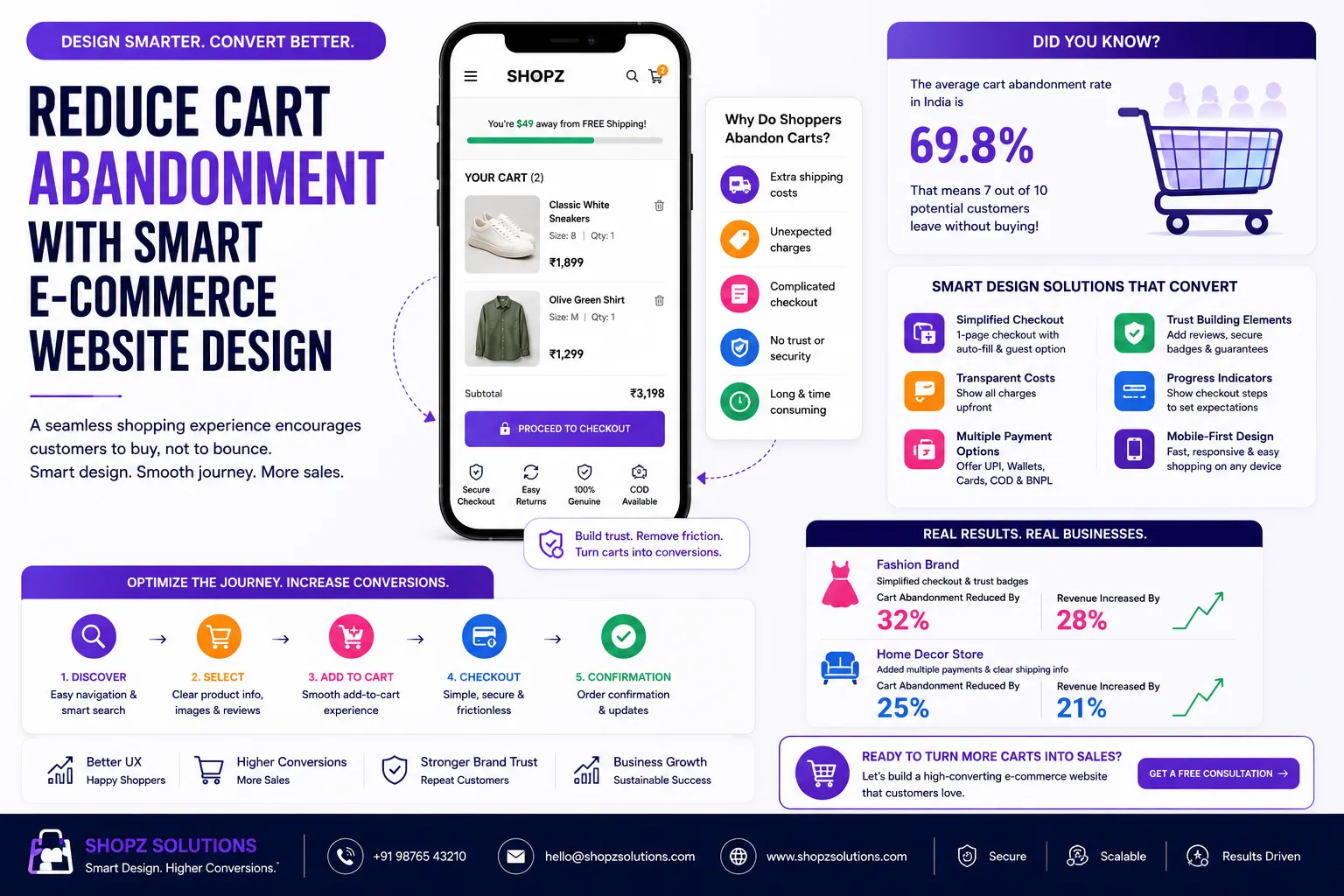
Reduce Cart Abandonment with Smart E-commerce Website Design
Published on: 16 Jun 2026
Reduce Cart Abandonment with Smart E-commerce Website Design
Introduction
Imagine this: a potential customer browses your online store, adds items to their cart, and then… leaves without completing the purchase. Frustrating, right? You're not alone. Cart abandonment is one of the biggest challenges in e-commerce, with average rates hovering around 70% globally. For Indian businesses, the stakes are even higher due to growing competition and evolving customer expectations.
Learn more about our Website services
But here's the good news: smart e-commerce website design can dramatically reduce cart abandonment. By optimizing your site's user experience, you can turn hesitant shoppers into loyal customers. In this guide, we'll explore actionable design strategies to recover lost sales and boost your conversion rates. From streamlining checkout flows to building trust with visual cues, every detail matters. Let's dive into the practical steps you can take today.
What is Cart Abandonment?
Cart abandonment occurs when a user adds products to their shopping cart but leaves the site before completing the purchase. Common reasons include unexpected costs, complicated checkout processes, and poor website performance. Understanding these triggers is the first step to fixing them. For instance, a study by Baymard Institute found that 24% of users abandon carts due to mandatory account creation, while 22% cite a long or complex checkout process. By addressing these pain points through design, you can significantly reduce abandonment rates.
Main Section 1: Optimize Your Checkout Flow
A clunky checkout process is a major culprit. Simplify it with these design tweaks:
- Reduce steps: Aim for a single-page checkout or at most three steps. Each extra click increases abandonment risk. For example, a one-page checkout that combines billing, shipping, and payment can cut abandonment by up to 20%.
- Guest checkout option: Don't force account creation. Offer a guest checkout to speed things up. This is especially important for first-time buyers who may not want to commit to an account.
- Progress indicators: Show users how far they are from completion. This reduces anxiety and encourages them to finish. A simple bar or step counter can make a big difference.
- Auto-fill fields: Use browser auto-fill or pre-populate data for returning customers. This saves time and reduces friction.
For example, Indian e-commerce giant Flipkart uses a streamlined checkout with minimal fields and clear progress bars. This design choice has contributed to their high conversion rates. Additionally, consider adding a "Save for Later" option to allow users to revisit items without losing them, which can reduce abandonment from decision paralysis.
Main Section 2: Build Trust with Clear Visual Cues
Trust is critical for online purchases. Your design should reassure customers at every step:
- Security badges: Display SSL certificates, payment icons (Visa, Mastercard, UPI), and trust seals near the checkout button. These visual cues can increase conversion by up to 30%.
- Transparent pricing: Show all costs upfront—shipping, taxes, and discounts. Hidden fees are a top reason for abandonment. For instance, include a price breakdown early in the cart page.
- Return policy: Make your return policy easy to find and understand. Use simple language and icons. A clear return policy can reduce anxiety and increase purchase intent.
- Customer reviews: Show ratings and testimonials near the cart or product pages. Social proof builds confidence, especially for new visitors.
Indian startup Meesho uses trust badges and clear pricing to build confidence among first-time buyers, especially in tier-2 and tier-3 cities. They also display real-time stock availability and delivery estimates, which further reduces uncertainty.
👉 Don't wait for the perfect moment; turn your vision into reality today.
Free ConsultationMain Section 3: Improve Site Speed and Mobile Experience
Slow loading times and poor mobile design are deal-breakers. According to Google, 53% of mobile users leave a site that takes longer than 3 seconds to load. To fix this:
- Optimize images: Use compressed, responsive images that load fast on all devices. Tools like TinyPNG or WebP format can reduce file sizes by up to 80%.
- Lazy loading: Load images only when they come into view to reduce initial load time. This is especially useful for product galleries.
- Mobile-friendly design: Ensure buttons are tappable, text is readable, and navigation is intuitive on small screens. Use a responsive layout that adapts to different screen sizes.
- Minimize redirects: Each redirect adds load time. Keep redirects to a minimum, especially during checkout.
Indian e-commerce platform Nykaa has invested heavily in mobile optimization, resulting in a seamless shopping experience that keeps users engaged. They also use accelerated mobile pages (AMP) for faster loading on mobile devices.
Expert Tips
- Use exit-intent popups: Offer a discount or free shipping when users try to leave the site. This can recover up to 15% of abandoning users. For example, a 10% discount code can be a powerful incentive.
- Send cart recovery emails: Follow up with users who abandon their carts. Include product images and a clear CTA. Send the first email within an hour of abandonment for best results.
- Test and iterate: A/B test different checkout designs, button colors, and copy to find what works best for your audience. For instance, test a green "Buy Now" button against a red one.
- Personalize the experience: Show recommended products or recent items to re-engage users. Use browsing history to suggest complementary items.
Common Mistakes to Avoid
- Hidden costs: Revealing shipping or tax only at the final step is a surefire way to lose customers. Always display total costs early.
- Forcing account creation: This is one of the top reasons for abandonment. Always offer guest checkout.
- Cluttered design: Too many distractions (popups, banners) can overwhelm users and drive them away. Keep the checkout page clean and focused.
- Poor error handling: If a form field fails, show clear error messages and keep the user's input intact. For example, highlight the field in red and provide a specific message like "Please enter a valid email address."
Future Trends
Looking ahead, expect more e-commerce sites to adopt one-click checkout (like Amazon's), AI-driven personalization, and voice-assisted shopping. Indian businesses should also integrate UPI and other local payment methods to cater to regional preferences. Staying ahead of these trends will help you maintain a competitive edge. For instance, implementing a one-click checkout can reduce checkout time by 50% and lower abandonment rates significantly.
👉 Free Website Audit
Get Free AuditFAQs
What is a good cart abandonment rate?
A good cart abandonment rate is typically below 60%. However, the global average is around 70%, so anything lower than that is considered strong. For high-performing stores, rates below 50% are achievable with optimized design.
How can I recover abandoned carts?
Use exit-intent popups, send follow-up emails with incentives, and retarget users with ads on social media. Design improvements also play a key role. For example, a well-timed email with a discount code can recover up to 10% of abandoned carts.
Why is mobile design important for cart abandonment?
Over 70% of e-commerce traffic in India comes from mobile devices. A poor mobile experience leads to high abandonment rates, so optimizing for mobile is essential. This includes responsive design, fast loading, and easy navigation.
Does page speed really affect cart abandonment?
Yes, even a one-second delay can reduce conversions by 7%. Fast loading times are critical for keeping users engaged and completing purchases. Tools like Google PageSpeed Insights can help identify areas for improvement.
What are the best payment options to reduce abandonment?
Offer popular local payment methods like UPI, net banking, and cash on delivery. In India, COD is still preferred by many, so include it as an option. Additionally, consider offering EMI options for high-value items to reduce friction.
How can I test my checkout flow for abandonment issues?
Use tools like Google Analytics to track drop-off points in the checkout funnel. Conduct user testing to identify pain points. A/B test different designs to see what reduces abandonment. For example, test a single-page checkout against a multi-step one.
Conclusion
Reducing cart abandonment is not just about discounts—it's about smart e-commerce website design. By simplifying checkout, building trust, and optimizing for speed and mobile, you can significantly boost your conversion rates. Start implementing these strategies today and watch your sales grow. Remember, every improvement in user experience directly impacts your bottom line.
CTA
Ready to transform your e-commerce store? Contact EishwarITSolution for expert website design services tailored to Indian businesses. Let's build a store that converts!