
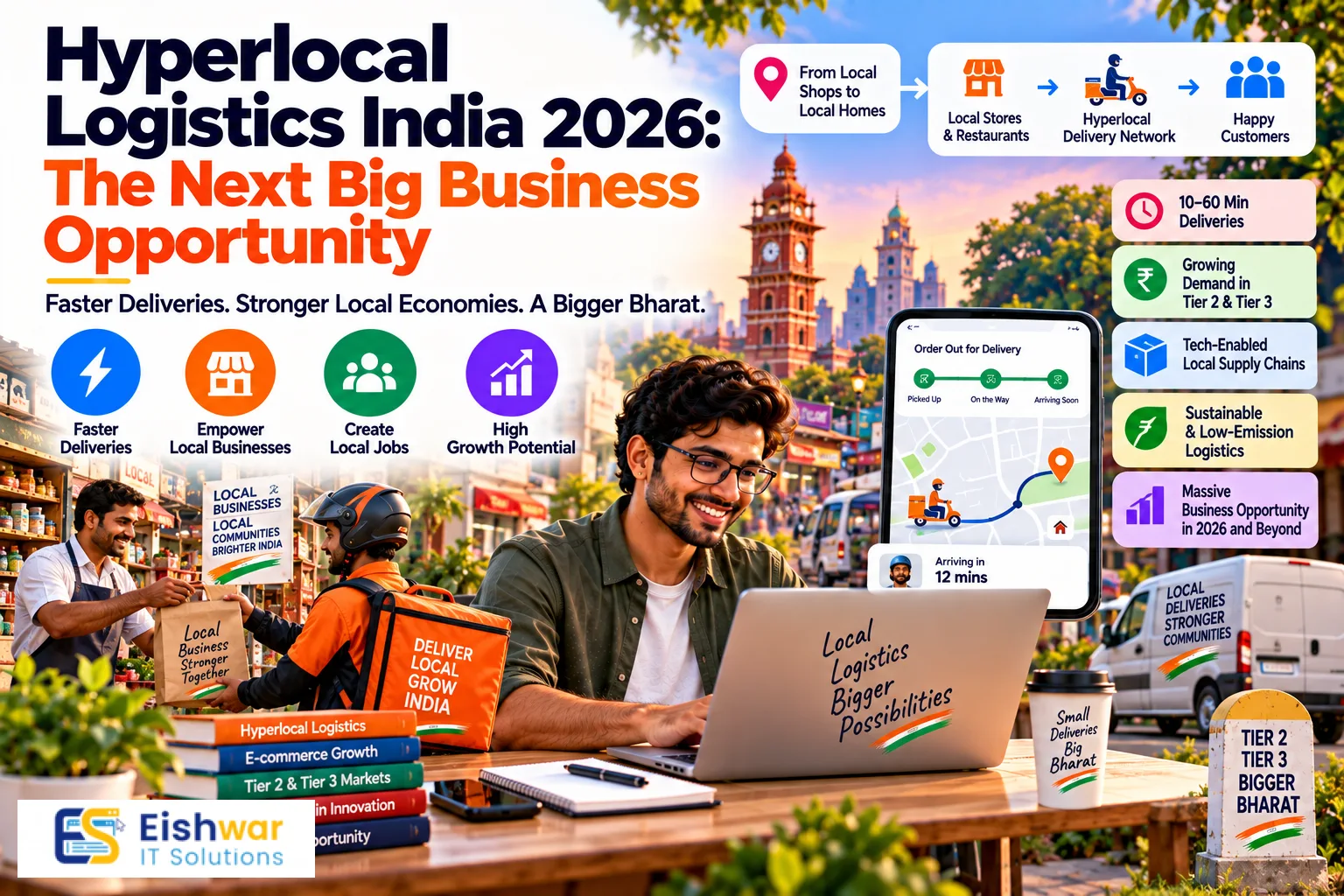
Hyperlocal Logistics India 2026: The Next Big Business Opportunity
Published on: 14 Aug 2026
Hyperlocal Logistics India 2026: The Next Big Business Opportunity
Introduction
India's logistics landscape is undergoing a seismic shift. With the rise of quick commerce, same-day delivery expectations, and digital-first consumers, hyperlocal logistics has emerged as a game-changer. By 2026, hyperlocal logistics is not just a trend—it's a necessity for businesses aiming to stay competitive. This article explores why hyperlocal logistics is the next big business opportunity in India, backed by data, trends, and actionable strategies.
Learn more about our Website services
The numbers tell a compelling story. According to a recent report by RedSeer Consulting, the hyperlocal logistics market in India is expected to reach $12 billion by 2026, growing at a compound annual growth rate (CAGR) of over 20%. This growth is fueled by a perfect storm of factors: increasing internet penetration, a booming e-commerce sector, and a shift in consumer behavior toward instant gratification. For entrepreneurs and established businesses alike, this represents a golden window to capitalize on a market that is still relatively fragmented and ripe for innovation.
Why Hyperlocal Logistics is Booming in India
The hyperlocal logistics market in India is projected to grow at a CAGR of over 20% through 2026. Factors driving this growth include:
- Rapid urbanization: Cities are expanding, and consumers expect faster deliveries. By 2026, over 40% of India's population will live in urban areas, creating dense clusters of demand that are ideal for hyperlocal operations.
- E-commerce penetration: Tier 2 and Tier 3 cities are now online shoppers, increasing demand for last-mile delivery. Platforms like Meesho and ShopClues have democratized online shopping, and these consumers expect the same speed as their metro counterparts.
- Quick commerce: Platforms like Blinkit and Zepto have set new standards for 10-30 minute deliveries. This has trained consumers to expect near-instant fulfillment for everyday essentials, from groceries to medicines.
- Digital payment adoption: UPI and digital wallets have made cashless transactions seamless. With over 300 million monthly UPI users, the friction of payment is removed, enabling faster order processing and delivery.
- Government initiatives: PM Gati Shakti and National Logistics Policy are improving infrastructure, reducing transit times, and lowering costs. These initiatives also promote multi-modal logistics, which benefits hyperlocal players by improving connectivity.
These factors create a fertile ground for hyperlocal logistics startups and existing businesses to innovate. The key is to understand the nuances of the Indian market—diverse demographics, varying infrastructure, and price sensitivity—and tailor solutions accordingly.
Key Drivers and Market Trends
Several trends are shaping the hyperlocal logistics space in 2026:
1. Rise of Dark Stores and Micro-Fulfillment Centers
Retailers are setting up dark stores in residential areas to enable faster deliveries. This reduces delivery time and costs. For example, a dark store in a high-density locality can service a 3-5 km radius within 30 minutes. The key is to strategically locate these micro-fulfillment centers based on demand patterns and real estate costs. In 2026, we expect to see more hybrid models where existing retail stores double as micro-warehouses, reducing the need for separate dark stores.
2. Electric Vehicles (EVs) for Last-Mile Delivery
With sustainability becoming a priority, EVs are being adopted for hyperlocal deliveries. Companies like Amazon and Flipkart are deploying EV fleets to reduce carbon footprints. In fact, Amazon has committed to deploying 10,000 EVs in India by 2025, and this trend will accelerate. EVs not only reduce emissions but also lower operating costs—fuel and maintenance are significantly cheaper than traditional vehicles. For hyperlocal players, this is a win-win: cost savings and a greener brand image.
👉 Don't wait for the perfect moment; turn your vision into reality today.
Free Consultation3. AI and Route Optimization
AI-powered route planning helps delivery partners minimize travel time, fuel costs, and delays. This is crucial for hyperlocal efficiency. For instance, AI algorithms can analyze real-time traffic data, weather conditions, and delivery density to suggest the most efficient routes. This reduces delivery times by up to 20% and cuts fuel costs by 15%. In 2026, expect AI to become even more sophisticated, with predictive analytics that anticipate demand spikes and pre-position delivery partners accordingly.
4. Crowdsourced Delivery Models
Platforms are leveraging gig workers and local delivery partners to handle peak demand without heavy investment. This model offers flexibility and scalability. For example, during festive seasons or sales events, crowdsourced delivery can scale up quickly without the need for permanent hiring. However, it also requires robust onboarding and training processes to ensure quality. In 2026, we'll see more platforms using gamification and incentives to retain gig workers and improve service levels.
5. Integration with Regional Language Interfaces
Apps and platforms are now supporting multiple Indian languages, making it easier for local businesses and delivery partners to participate. This is crucial for reaching the next 500 million users who are more comfortable in their native languages. For instance, a delivery partner in a Tier 2 city might prefer an app interface in Hindi or Tamil. By offering multi-language support, platforms can expand their talent pool and improve user experience.
Challenges and Solutions in Hyperlocal Logistics
While the opportunities are immense, hyperlocal logistics comes with its own set of challenges:
- High operational costs: Last-mile delivery is expensive, accounting for up to 50% of total logistics costs. Solution: Optimize routes and use EVs to reduce costs. Additionally, consider dynamic pricing to pass on some costs to consumers during peak hours.
- Infrastructure gaps: Poor road conditions in some areas. Solution: Use local knowledge and alternative routes. Invest in lightweight vehicles like two-wheelers or cargo bikes that can navigate narrow lanes and traffic congestion.
- Regulatory compliance: Varying state regulations. Solution: Stay updated and partner with local experts. For example, some states have specific rules for EV charging infrastructure or gig worker benefits. Being compliant not only avoids fines but also builds trust.
- Customer expectations: Instant gratification is the norm. Solution: Set realistic delivery windows and use real-time tracking. Communicate proactively if there are delays, and offer flexible delivery options like time slots or pickup points.
- Data security: Handling customer data requires robust cybersecurity. Solution: Invest in secure platforms and comply with data protection laws like the upcoming Data Protection Act. This includes encrypting data, conducting regular security audits, and training staff on data privacy.
Addressing these challenges head-on can set your business apart. For example, a hyperlocal startup in Bengaluru successfully reduced operational costs by 25% by using AI-driven route optimization and switching to electric two-wheelers. Similarly, a grocery delivery service in Jaipur overcame infrastructure gaps by partnering with local kirana stores to serve as pickup points, reducing delivery distances.
👉 Free Website Audit
Get Free AuditExpert Tips for Businesses
To succeed in hyperlocal logistics, consider these expert tips:
- Leverage technology: Use AI for demand forecasting and route optimization. For instance, predictive analytics can help you anticipate which products will be in demand in specific areas, allowing you to pre-stock inventory.
- Partner with local players: Collaborate with local stores and delivery partners to expand reach. This not only reduces costs but also helps you tap into their local knowledge and customer base.
- Focus on customer experience: Provide real-time tracking and flexible delivery options. A seamless experience can turn a one-time customer into a loyal advocate. Consider offering subscription models for regular deliveries, like a monthly grocery subscription.
- Optimize for mobile: Ensure your ordering and tracking interfaces are mobile-first. With over 700 million smartphone users in India, mobile is the primary channel. A responsive, user-friendly app can significantly improve conversion rates.
- Invest in training: Train delivery partners in safe handling and customer service. Well-trained partners not only reduce damages but also enhance your brand's reputation. Regular training sessions on etiquette, navigation, and handling returns can make a big difference.
Common Mistakes to Avoid
Avoid these pitfalls that can derail your hyperlocal logistics strategy:
- Ignoring data: Not using analytics to understand customer preferences. Data is your most valuable asset—use it to identify ordering patterns, peak times, and popular products. This can inform everything from inventory management to marketing campaigns.
- Overpromising delivery times: Setting unrealistic expectations leads to dissatisfaction. Be honest about delivery windows, and if you can't guarantee 10-minute delivery, don't promise it. Better to under-promise and over-deliver.
- Neglecting reverse logistics: Returns are part of the business—plan for them. A smooth return process can enhance customer trust. Consider offering pickup of returns during the same delivery trip to save costs.
- Underestimating competition: Big players have deep pockets; differentiate with niche services. For example, you could specialize in delivering fragile items, or offer same-day delivery for specific product categories like electronics or flowers.
- Lack of scalability: Design your model to handle growth without breaking down. This means investing in scalable technology, having contingency plans for peak seasons, and building a flexible workforce.
Future Trends in Hyperlocal Logistics
Looking ahead, hyperlocal logistics will evolve with:
- Drone deliveries: Trials are underway in India for medical and e-commerce deliveries. For example, the Indian government has allowed drone deliveries in certain zones for medical supplies. By 2026, we may see drones delivering small packages in gated communities and tech parks.
- Autonomous vehicles: Self-driving delivery bots may become common in tech parks and campuses. These bots can navigate sidewalks and deliver packages within a limited radius, reducing the need for human delivery partners in certain areas.
- Blockchain for transparency: Enhanced traceability in the supply chain. Blockchain can provide an immutable record of each delivery, from pickup to drop-off, increasing trust and reducing disputes.
- Green logistics: Carbon-neutral delivery options will become a differentiator. Companies that adopt EVs, use recyclable packaging, and offset their carbon footprint will appeal to environmentally conscious consumers.
- AI-driven predictive logistics: Anticipating demand and pre-positioning inventory. For example, AI can predict that a certain area will see a spike in demand for cold drinks during a heatwave, allowing you to stock up in advance.
FAQs
1. What is hyperlocal logistics?
Hyperlocal logistics refers to delivery services within a limited geographic area, typically a few kilometers, enabling rapid delivery of goods. It leverages local infrastructure and partners to ensure that orders are fulfilled and delivered in the shortest possible time, often within minutes to a few hours.
👉 Free Homepage Demo
Book Demo2. How does hyperlocal logistics benefit small businesses?
It allows small businesses to offer fast delivery without heavy investment in infrastructure, enhancing customer satisfaction and competitiveness. For instance, a local bakery can use a hyperlocal delivery platform to deliver fresh bread to customers within 30 minutes, competing with larger chains. This levels the playing field and helps small businesses build a loyal customer base.
3. What are the key challenges in hyperlocal logistics?
Challenges include high operational costs, infrastructure gaps, regulatory compliance, and meeting customer expectations for speed. Additionally, managing a gig workforce and ensuring data security are emerging challenges. However, with the right technology and partnerships, these can be mitigated.
4. How can technology improve hyperlocal logistics?
AI and route optimization tools reduce delivery times and costs, while real-time tracking enhances customer trust. For example, AI can predict the fastest route considering traffic and weather, and customers can track their order in real-time, reducing anxiety and improving satisfaction. Additionally, mobile apps with multi-language support can streamline operations for delivery partners.
5. Is hyperlocal logistics sustainable?
Yes, with the adoption of EVs and optimized routes, hyperlocal logistics can be environmentally sustainable. EVs produce zero tailpipe emissions, and route optimization reduces fuel consumption. Moreover, using local fulfillment centers reduces the distance traveled, further lowering the carbon footprint. Companies that prioritize sustainability can also attract eco-conscious customers.
6. What is the future of hyperlocal logistics in India?
The future includes drone deliveries, autonomous vehicles, and deeper integration with AI and blockchain, making it more efficient and customer-centric. We can expect to see more personalized delivery options, such as time-specific slots and eco-friendly packaging. Additionally, hyperlocal logistics will expand beyond metros to Tier 2 and Tier 3 cities, driven by increasing internet penetration and e-commerce adoption.
Conclusion
Hyperlocal logistics is not just a trend but a fundamental shift in how goods are delivered in India. For businesses, it offers a unique opportunity to meet customer expectations and drive growth. By embracing technology, focusing on customer experience, and staying ahead of trends, you can position your business for success in 2026 and beyond. The market is ripe for innovation, and those who act now will be the leaders of tomorrow.
Ready to Transform Your Business with Hyperlocal Logistics?
At EishwarITSolution, we help businesses leverage technology to optimize their logistics and delivery operations. Whether you need a custom delivery app, route optimization software, or a complete digital transformation strategy, our experts are here to guide you. Contact us today for a free consultation and take the first step towards dominating your local market.
CTA
Ready to Transform Your Business with Hyperlocal Logistics? At EishwarITSolution, we help businesses leverage technology to optimize their logistics and delivery operations. Whether you need a custom delivery app, route optimization software, or a complete digital transformation strategy, our experts are here to guide you. Contact us today for a free consultation and take the first step towards dominating your local market.