Brand Licensing for Indian SMEs: Turn Brand Equity Into Growth
Published on: 16 Nov 2026
Brand Licensing for Indian SMEs: Turn Brand Equity Into Growth
Introduction
Many Indian SMEs have something valuable that does not always show up on a balance sheet: trust. Customers know the brand, repeat purchases happen, and local reputation is strong. Yet growth often feels expensive. Opening new stores, launching new product lines or entering new states can demand capital, manpower and operational bandwidth that small and midsize businesses may not have.
Learn more about our Website services
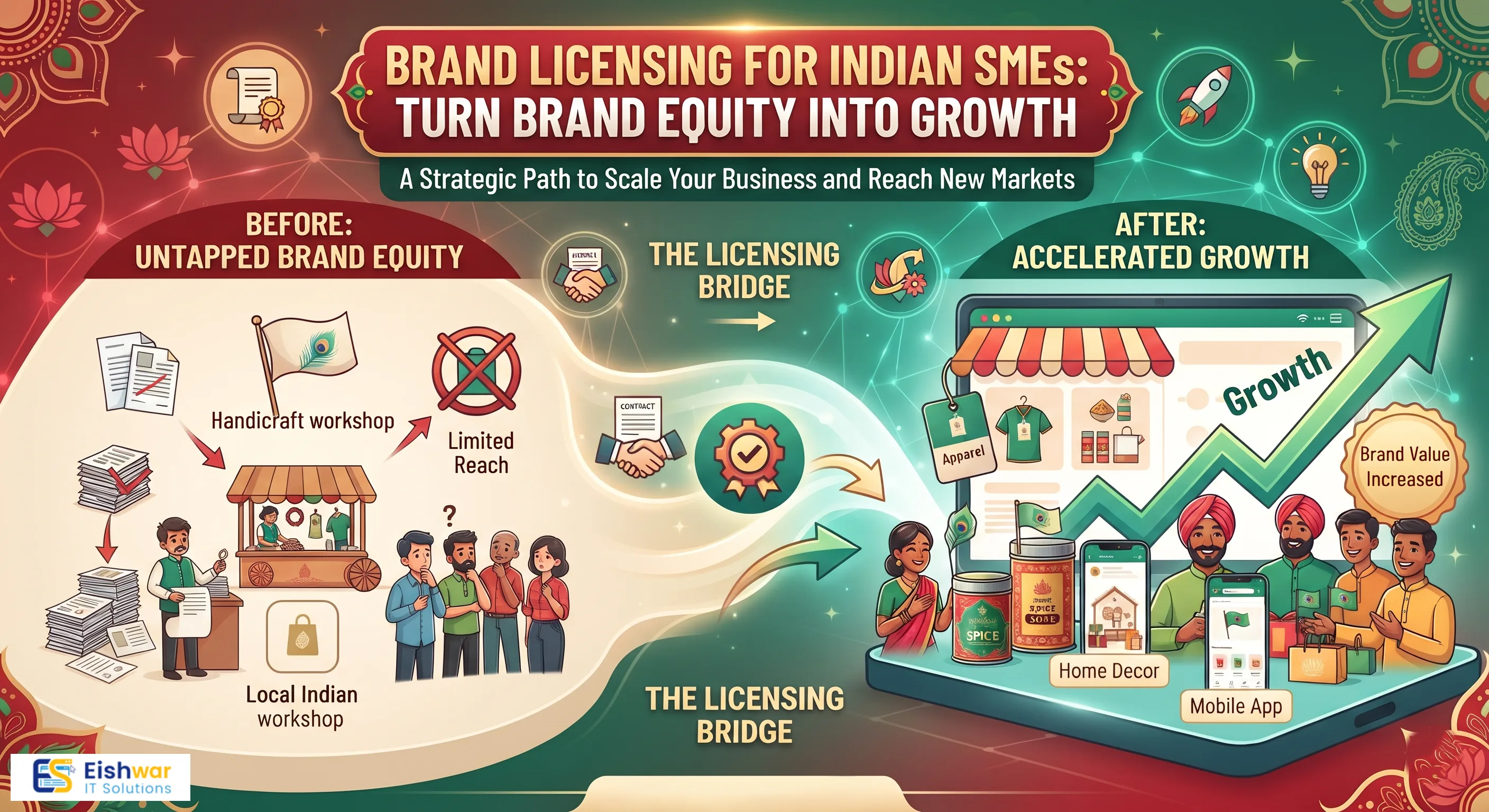
Brand licensing offers a practical alternative. It lets another business use your brand name, systems, designs or content under clear rules, while you earn a fee or royalty. When done well, it can turn brand equity into a growth engine without owning every warehouse, outlet or production line. When done casually, it can damage the very trust that made the brand valuable.
For 2027, brand licensing is especially relevant for Indian SMEs. D2C brands are expanding into offline retail, quick commerce is reshaping distribution, tier-2 and tier-3 demand is rising, and Make in India supply chains are creating new partnership opportunities. This guide gives business owners, marketers and professionals a practical roadmap.
Main Section 1: What Brand Licensing Means for Indian SMEs
Brand licensing is a formal arrangement where the brand owner, called the licensor, gives another business, the licensee, permission to use specified brand assets. These assets may include the brand name, logo, trademark, packaging style, recipes, content, mascot, training methodology or customer experience standards. In return, the licensor usually receives an upfront fee, a minimum guarantee, a royalty on sales, or a mix of all three.
The key word is control. Licensing is not selling your brand. It is renting defined rights for a defined period, territory and category, with quality standards attached.
Licensing vs franchising vs co-branding
- Brand licensing: Focuses on permission to use intellectual property and brand assets. The licensee runs the business within agreed quality and approval rules.
- Franchising: Usually includes a fuller operating model, training, supply chain, site standards and ongoing support. It is heavier and more regulated in practice.
- Co-branding: A time-bound collaboration between two brands for a product, campaign or collection. It is narrower than licensing.
- Private label: A retailer sells products under its own label. The manufacturer may not get brand visibility.
What Indian SMEs can license
The opportunity is wider than most owners think. A food brand can license ready-to-cook mixes, snacks or condiments. A salon chain can license an academy or a haircare range. An ayurvedic skincare business can license body care, wellness kits or spa services. A coaching institute can license study material, test series or a franchise-style learning centre. Even a strong regional retail name can license home care, apparel or gifting lines in adjacent markets.
- Brand name and logo for adjacent product categories.
- Trademarked characters, mascots and packaging designs.
- Recipes, formulations and quality specifications where legally appropriate.
- Training modules, playbooks and service standards.
- Content libraries, courses and digital templates.
- Store design, visual identity and customer experience guidelines.
Why it fits Indian SMEs in 2027
Consumer discovery is now fragmented across social media, marketplaces, quick commerce and local retail. A trusted brand can travel faster through partners than through owned expansion alone. Licensing also helps SMEs test new categories without committing full capex. For example, a Pune-based spice brand could license ready-to-cook gravies to a food manufacturer. A Bengaluru salon could license an academy to trainers in tier-2 cities. A Jaipur wellness brand could license a personal care range to a contract manufacturer with distribution strength.
👉 Don't wait for the perfect moment; turn your vision into reality today.
Free ConsultationThe model works best when the brand already has clear positioning, repeat customers and documented standards. If customers buy only because of low price, licensing is weak. If they buy because they trust the name, the method or the experience, licensing can be strong.
Main Section 2: How to Build a Licensing Strategy That Protects Brand Equity
Licensing is not outsourcing your reputation. It is extending it under supervision. The strategy must balance speed with control. Before signing any partner, build the commercial and brand guardrails.
1. Audit brand equity and readiness
Start with honest questions. What does the brand stand for? Which customer segments trust it? What are the non-negotiables in quality, service and pricing? How strong is trademark protection? Do you have brand guidelines, product standards and approval processes? If the answer to most of these is unclear, fix the basics first.
A simple readiness check includes trademark status, customer loyalty, documented processes, quality benchmarks, internal team capacity and legal budget. Licensing without documentation often creates confusion and disputes.
2. Define licensing zones and boundaries
Decide what can be licensed and what must stay in-house. A bakery brand may license packaged cookies but not fresh cakes. A skincare brand may license body lotion but not prescription-grade products. A coaching brand may license test series but not use your name for unaudited results claims.
Create three zones: green for safe extensions, amber for controlled pilots, and red for categories that could harm trust. This prevents partners from pushing the brand into categories that feel off-brand or risky.
3. Choose partners for capability and values
Do not choose only the highest bidder. Assess manufacturing quality, distribution reach, financial stability, service culture, compliance record and social media behaviour. Visit their facility. Speak to their existing clients. Check whether their team can follow brand guidelines without constant reminders.
For Indian SMEs, cultural fit matters. A partner who understands local buying habits in Maharashtra, Tamil Nadu or Uttar Pradesh may add more value than a larger but distant operator. Start with a pilot territory or limited SKU range before granting broad rights.
4. Structure commercial terms carefully
Royalty rates vary by category, brand strength and support provided. A common starting conversation for many SME licensing deals is in the mid single digits as a percentage of net sales, but the right number depends on margins and the role of the brand. Also consider a minimum guarantee, an upfront licence fee, marketing contributions and audit rights.
- Territory: India-wide, state-specific, metro-only or export markets.
- Term: Three to five years with renewal conditions is common for pilots.
- Exclusivity: Avoid broad exclusivity in the first deal. Tie it to performance milestones.
- Royalty base: Define whether it applies to gross sales, net sales, MRP or invoiced value.
- Minimum guarantee: Protects you if the partner underperforms.
- Reporting: Monthly sales reports, quarterly reviews and annual audits.
5. Protect intellectual property and quality
Register your trademark in the relevant classes before licensing. Use a written licence agreement drafted or reviewed by an intellectual property lawyer. Include quality control clauses, approval workflows, indemnity, confidentiality, termination rights and post-termination inventory rules. If the partner produces goods, specify packaging approvals and sampling processes.
👉 Free Website Audit
Get Free AuditThe agreement should also clarify who owns customer data, content, product improvements and social media assets created during the partnership. Ambiguity here is expensive later.
Main Section 3: Launch and Manage Licensing Partnerships
A licensing deal is not a one-time signature. It is an operating relationship. The launch phase decides whether customers experience the same brand across every touchpoint.
Create a brand licensing playbook
Give partners a practical manual, not a 100-page PDF that nobody reads. Include logo usage, colour codes, typography, packaging layouts, photography style, tone of voice, product claims, customer service scripts and escalation contacts. Add examples of approved and rejected work so partners understand the standard.
For digital channels, include social media do and do-not lists, influencer disclosure rules, marketplace listing formats and customer review response guidelines. Many Indian customers will meet the licensed product online first, so digital consistency matters.
Onboard and train partners
Run a structured onboarding session with the partner sales, quality and marketing teams. Appoint a brand champion on both sides. Set a monthly rhythm for performance reviews, quality checks and content approvals. For service brands, include mystery shopping and staff training refreshers.
Do not assume that a good manufacturer understands brand building. Explain why certain choices are non-negotiable. Show customer feedback and complaints so the partner sees the cost of shortcuts.
Run quality and brand audits
Use a simple audit scorecard. Check product samples, packaging accuracy, claims compliance, social media posts, customer response time and complaint resolution. For physical products, test from retail shelves, not only from the factory. For services, audit the customer journey from enquiry to follow-up.
Social listening is also useful. Search for the brand name with words like review, complaint, fake or duplicate. Brand licensing can invite copycats, and customers may blame the original brand for partner errors.
Measure what matters
- Royalty revenue and minimum guarantee achievement.
- Partner sell-through and repeat purchase rates.
- Complaint rate and resolution time.
- Audit scores for quality and brand compliance.
- Brand search volume and social sentiment.
- Partner profitability, because an unhealthy partner cannot maintain quality.
- Category cannibalisation or pricing conflict with your own products.
Handle disputes and exits professionally
Most licensing disputes come from unclear scope, delayed approvals, royalty under-reporting or quality failures. Keep written communication. Use escalation matrices. If termination becomes necessary, follow the notice period and inventory sell-off rules. Protect customer data and transition communication so buyers are not confused.
A good exit plan is part of a good licensing plan. It should be written before the partnership starts.
👉 Free Homepage Demo
Book DemoExpert Tips
- License one category first. Prove the model with a limited SKU or territory before expanding.
- Treat brand guidelines as a business tool. Make them visual, practical and easy for partner teams to use.
- Ask for a marketing plan from the partner. Licensing should grow brand visibility, not only fill shelf space.
- Protect your trademark early. Registration delays can weaken your negotiating power.
- Set approval turnaround times. Slow approvals frustrate partners and delay launches.
- Review social media before launch. The first partner post often sets customer expectations.
Common Mistakes
- Licensing to the first interested partner without checking capability.
- Giving broad exclusivity without performance milestones.
- Using a generic agreement that ignores category-specific risks.
- Failing to define royalty calculations clearly.
- Approving packaging once and never auditing retail shelves again.
- Letting partners make unverified claims that create legal or reputational risk.
- Ignoring customer service, because one bad partner experience can damage the whole brand.
Future Trends
- Micro-licensing: Smaller SMEs will license niche digital assets, templates, recipes and training modules, not only large product lines.
- AI-assisted brand governance: Approval workflows and social listening tools will help SMEs monitor partners at lower cost.
- Tier-2 and tier-3 licensing: Regional partners with local trust will become more attractive than pure metro-focused deals.
- Sustainability clauses: Licensors will demand packaging, sourcing and waste commitments from partners.
- Digital-first brand assets: Content libraries, creator communities and community IP will be licensed alongside physical products.
- Stricter IP enforcement: As licensing grows, trademark monitoring and online takedowns will become routine.
FAQs
Is brand licensing legally different from franchising in India?
Yes. Brand licensing generally grants rights to use intellectual property such as a name, logo or content. Franchising usually includes a fuller operating system, training and ongoing support. The legal and commercial terms differ, so get professional advice for your specific model.
How much royalty should an Indian SME charge?
Royalty depends on category margins, brand strength, support provided and territory. Many deals start with a modest percentage of net sales plus a minimum guarantee. Test the structure in a limited pilot before setting long-term rates.
Do I need a registered trademark before licensing?
It is strongly advisable. A registered trademark gives stronger protection and negotiating power. You can apply before licensing, but do not treat registration as optional if the brand is central to the deal.
Can a small business license its brand to a manufacturer?
Yes. Many SMEs license product categories to manufacturers that have production or distribution strength. The key is to control quality, packaging, claims and channel conflict through a clear agreement.
What is the biggest risk in brand licensing?
Brand dilution. If a partner delivers poor quality, misuses claims or creates customer confusion, the original brand suffers. Strong partner selection, quality audits and termination rights reduce this risk.
How do we measure licensing success?
Track royalty income, minimum guarantee achievement, partner sell-through, complaint rates, audit scores, repeat purchases and brand sentiment. Revenue alone is not enough if customer trust declines.
Conclusion
Brand licensing can help Indian SMEs grow beyond the limits of owned capital. It can open new categories, enter new regions and monetise trust without building every asset from scratch. But it rewards discipline. The SMEs that succeed will be the ones that document their brand, protect their IP, choose partners carefully and audit the customer experience.
In 2027, the opportunity is real, especially for brands with strong local trust and clear operating standards. Treat licensing as a strategic extension of your brand, not a shortcut to royalty income. Build the guardrails first, pilot small, measure honestly and scale only when the partner proves they can protect what customers value.
CTA
Ready to explore brand licensing for your Indian SME? EishwarITSolution can help you assess brand readiness, structure partner guidelines and build a practical growth roadmap. Visit eishwar.com to start the conversation.