
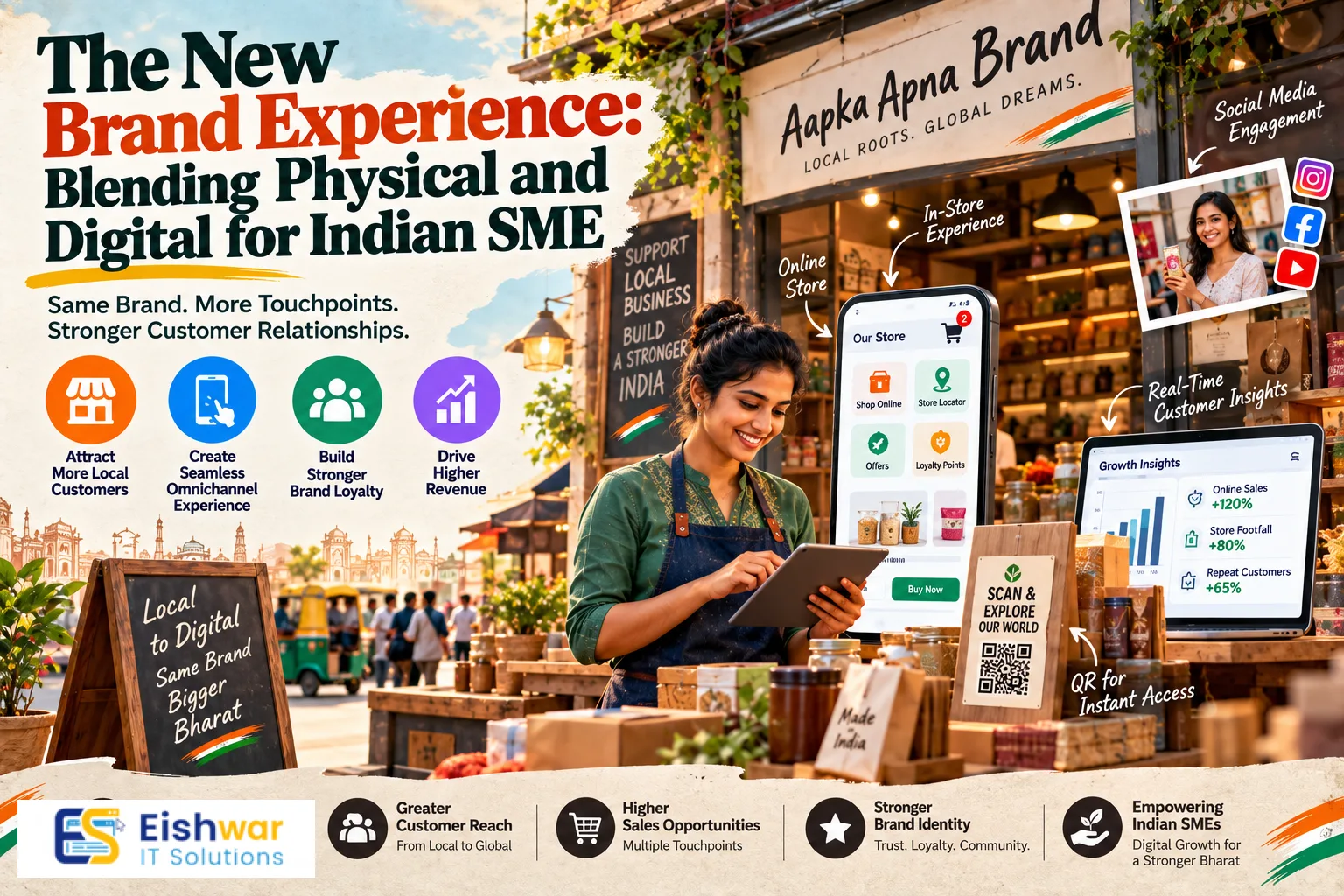
The New Brand Experience: Blending Physical and Digital for Indian SME
Published on: 14 Aug 2026
The New Brand Experience: Blending Physical and Digital for Indian SMEs
Introduction
Imagine a customer walking into your store, scanning a QR code on a product, and instantly seeing its story, reviews, and a video of how it's made. Later, they receive a personalized follow-up on WhatsApp with a special offer. That’s the new brand experience—a seamless blend of physical and digital that feels natural, not forced.
Learn more about our Website services
For Indian SMEs, this isn’t just a trend; it’s a survival strategy. With the rise of digital-first consumers and the resurgence of physical retail post-pandemic, the lines between online and offline are blurring. Your brand must exist everywhere your customer is, and more importantly, it must feel like one continuous story.
In this guide, we’ll explore how you can create a powerful phygital brand experience that builds trust, drives loyalty, and sets you apart from competitors. You’ll get practical steps, real-world examples, and expert tips tailored for the Indian market.
Main Section 1: Understanding Phygital Branding
What is Phygital Branding?
Phygital branding is the integration of physical and digital experiences to create a unified customer journey. It’s not just about having both a store and a website; it’s about making them work together seamlessly. For example, a customer might browse your products online, then visit your store to try them, and finally order via your app for home delivery.
Think of it as a handshake between the tangible and the virtual. The physical world offers sensory engagement—touch, smell, sight—while the digital world offers convenience, personalization, and data. When these two are woven together, you create a brand experience that is greater than the sum of its parts.
Why It Matters for Indian SMEs
India’s consumer base is diverse. While metro cities have high internet penetration, tier-2 and tier-3 cities are rapidly coming online. Your customers might start their journey on a smartphone but prefer to make big purchases in person. By blending both, you cater to all these preferences.
Consider the example of a boutique clothing brand in Jaipur. They use Instagram to showcase new designs and drive traffic to their physical store. In-store, they have digital screens showing styling videos and a tablet for customers to order out-of-stock sizes online. This creates a smooth experience that encourages repeat visits.
Moreover, the Indian market is uniquely poised for phygital because of the ubiquity of mobile phones and the cultural importance of physical touchpoints. A customer in a small town may not have access to high-speed internet, but they do have a smartphone. By offering a lightweight mobile experience and a welcoming physical store, you can bridge the gap.
The Three Pillars of Phygital Branding
- Consistency: Your brand’s look, tone, and message must be identical across all touchpoints. A customer should feel they’re interacting with the same brand whether they’re on your website, in your store, or on social media. This includes visual elements like logos and colors, as well as the tone of your communication.
- Convenience: Use technology to make life easier for customers. For example, allow them to check real-time inventory online before visiting your store, or offer click-and-collect options. The goal is to reduce friction at every step.
- Personalization: Use data from digital interactions to personalize physical experiences. If a customer has items in their online cart, greet them in-store with those items ready for trial. This makes the customer feel valued and understood.
Main Section 2: How to Blend Physical and Digital Touchpoints
Step 1: Map Your Customer Journey
Start by understanding every step your customer takes, from discovery to purchase and beyond. Identify where they switch between digital and physical. For instance, they might see an ad on Facebook, visit your website, then call your store for more details.
👉 Don't wait for the perfect moment; turn your vision into reality today.
Free ConsultationActionable Tip: Create a customer journey map for your business. List all touchpoints, both online and offline. Note any gaps or friction points where the experience feels disjointed. For example, if a customer can’t find store hours on your website, that’s a gap. If your store doesn’t have Wi-Fi for customers to check online reviews, that’s a friction point.
Step 2: Integrate Digital in Your Physical Space
Your store is no longer just a place to sell; it’s a place to engage. Use technology to enhance the in-store experience.
- QR Codes: Place QR codes on product tags that lead to detailed information, reviews, or style guides. This is a low-cost, high-impact way to connect the physical product with digital content.
- Digital Signage: Use screens to showcase your brand story, new arrivals, or customer testimonials. This can replace static posters and provide dynamic content that changes based on the time of day or promotions.
- Interactive Kiosks: Let customers browse your entire catalog, check stock, and order items not available in-store. This is especially useful for businesses with limited shelf space.
Example: A home decor store in Mumbai uses QR codes on furniture. Scanning them shows the product in different room settings via augmented reality (AR), helping customers visualize the item in their own home. This not only aids decision-making but also creates a memorable experience that customers are likely to share on social media.
Step 3: Bring Physical Elements into Your Digital Channels
Your website and social media should reflect your physical brand’s atmosphere. Show your store, your team, and your processes. This builds authenticity and trust.
- Virtual Store Tours: Offer a 360-degree view of your store on your website. This gives online shoppers a sense of the physical space and can increase their confidence in your brand.
- Behind-the-Scenes Content: Share videos of your products being made or your team at work. This humanizes your brand and creates an emotional connection.
- User-Generated Content: Encourage customers to share photos of their purchases in real life. Repost these on your digital channels. This not only provides social proof but also shows that your brand is active and engaged.
Step 4: Use Data to Connect the Dots
When a customer interacts with you online, use that data to personalize their physical experience. If they’ve browsed a specific product category, have your staff mention those items when they visit.
👉 Free Website Audit
Get Free AuditActionable Tip: Use a CRM system to track customer interactions across channels. Train your staff to access this information (with consent) to offer tailored recommendations. For example, if a customer has been browsing your website for running shoes, your staff can greet them with a selection of running shoes and ask if they’d like to try them on.
Step 5: Offer Seamless Fulfillment Options
Give customers the flexibility to buy online and pick up in-store (BOPIS), return online purchases in-store, or get home delivery from the store. This convenience is a huge part of the phygital experience.
Example: An electronics retailer in Delhi allows customers to reserve a product online and pick it up at the store within two hours. This reduces wait times and encourages foot traffic. Additionally, they allow returns for online orders to be processed in-store, which saves customers the hassle of shipping back items.
Main Section 3: Real-World Examples and Case Studies
Case Study 1: A Coffee Chain in Bengaluru
A local coffee chain wanted to increase customer loyalty. They launched an app that lets customers order ahead and earn points. In-store, they have digital screens that display personalized greetings for app users. They also offer exclusive discounts on new blends through the app, driving digital engagement. As a result, their repeat customer rate increased by 30%.
The key takeaway here is that the app didn’t replace the physical experience; it enhanced it. Customers still loved the aroma of freshly brewed coffee and the cozy ambiance, but the app made ordering faster and rewarded loyalty, making them feel special.
Case Study 2: A Handicraft Retailer in Jaipur
This retailer sells traditional handicrafts. They use Instagram to showcase artisans and their stories. Each product in the store has a QR code that plays a short video of the artisan making the item. This creates an emotional connection and justifies premium pricing. Their online sales also increased because customers who visited the store later purchased more items online.
This case study illustrates how phygital branding can be used to tell a story. By connecting the physical product to the digital narrative of the artisan, the retailer added value that competitors couldn’t easily replicate.
Case Study 3: A Fitness Studio in Pune
A fitness studio offers both physical classes and an online workout platform. Members can book classes via the app, and their in-store experience is personalized based on their fitness goals. The studio uses wearables to track progress, which syncs with the app. This blend of physical and digital keeps members engaged and reduces churn.
The fitness studio’s success lies in the seamless integration of data. Members can see their progress on the app, and the trainers can access that data to tailor workouts. This creates a feedback loop that motivates members and makes them feel invested in their fitness journey.
👉 Free Homepage Demo
Book DemoExpert Tips
- Start Small: You don’t need a massive budget. Begin with QR codes or a simple app feature. Test and iterate. For example, a small bakery could start by adding QR codes to their takeaway boxes that lead to a feedback form or a loyalty program sign-up.
- Focus on Mobile: In India, mobile is the primary device for most users. Ensure your digital touchpoints are mobile-friendly. This means having a responsive website, fast-loading pages, and easy-to-use apps.
- Train Your Team: Your staff should understand the phygital journey and be able to assist customers with digital features. For instance, if a customer is struggling to scan a QR code, a staff member should be able to help.
- Measure Everything: Track metrics like foot traffic, online engagement, and conversion rates. Use this data to refine your strategy. For example, if you notice that customers who scan QR codes are more likely to make a purchase, you might want to expand the use of QR codes.
- Listen to Customers: Ask for feedback at every touchpoint. Use surveys or social listening to understand what’s working and what’s not. This will help you make informed decisions about where to invest in phygital initiatives.
Common Mistakes
- Treating Physical and Digital as Separate Silos: This destroys the seamless experience. Integrate your operations and data. For example, if your online inventory isn’t synced with your store inventory, customers may come in for an item that’s out of stock, leading to frustration.
- Ignoring Local Context: What works in one city may not work in another. Understand your local audience’s preferences. For instance, in a metro city, customers might prefer app-based ordering, while in a smaller city, they might prefer WhatsApp ordering.
- Overcomplicating Technology: Don’t adopt tech just for the sake of it. It should solve a real problem for your customers. If a QR code doesn’t lead to useful information, it’s just a gimmick.
- Forgetting the Human Element: Technology should enhance, not replace, personal interaction. Customers still value human touch. A chatbot can handle simple queries, but for complex issues, a human should be available.
- Inconsistent Branding: If your website looks different from your store, customers get confused. Maintain visual and tonal consistency. This includes everything from the color scheme to the language used in communication.
Future Trends
- AR and VR: Augmented reality will become more common for trying products virtually, from furniture to clothing. For example, a customer could use AR to see how a sofa looks in their living room before buying.
- AI-Powered Personalization: AI will help you offer real-time personalized recommendations based on a customer’s past behavior. This could be as simple as showing a returning customer products they’ve viewed before.
- Voice Commerce: With the rise of smart speakers, customers may soon order products by voice, blending digital convenience with physical fulfillment. This could be particularly useful for repeat purchases.
- Sustainability: Customers are increasingly expecting brands to be eco-conscious. Blend digital to reduce paper usage and physical to offer eco-friendly packaging. For example, instead of printing receipts, you could send them via email or WhatsApp.
- Hyperlocal Experiences: Use geo-fencing to send offers to customers near your store, bridging the gap between online and offline. For instance, a restaurant could send a notification to someone within a 1-km radius offering a discount on their next visit.
FAQs
Q1: What is phygital branding?
Phygital branding is the integration of physical and digital experiences to create a unified customer journey. It ensures that customers have a seamless experience whether they interact with your brand online or offline.
Q2: Why is phygital branding important for Indian SMEs?
Indian consumers often switch between online research and in-store purchases. Phygital branding helps you meet customers at every touchpoint, enhancing convenience and building loyalty. It also allows SMEs to compete with larger players by offering personalized experiences.
Q3: How can I start with phygital branding on a small budget?
Start with simple, low-cost solutions like QR codes on product tags, a mobile-friendly website, and using social media to drive in-store visits. Gradually add more features based on customer feedback. You don’t need to invest in expensive technology right away.
Q4: What are some common mistakes to avoid?
Avoid treating physical and digital as separate, ignoring local preferences, overcomplicating technology, and compromising on human interaction. Also, ensure your branding is consistent across all channels. These mistakes can undermine the seamless experience you’re trying to create.
Q5: How do I measure the success of my phygital strategy?
Track metrics such as foot traffic, online engagement, conversion rates, repeat purchases, and customer satisfaction scores. Use analytics tools to see how customers move between channels. For example, you can use Google Analytics to see how many website visitors also visit your store.
Q6: Can phygital branding work for a service-based business?
Absolutely. For example, a salon can offer online booking, send reminders via WhatsApp, and use tablets in-store for digital consultations. This enhances the customer experience and can increase efficiency.
Q7: What role does data play in phygital branding?
Data is crucial. It helps you understand customer preferences, personalize experiences, and optimize your strategy. However, always respect privacy and obtain consent. Use data ethically to build trust with your customers.
Conclusion
The new brand experience is not about choosing between physical or digital—it’s about combining them to create something greater. For Indian SMEs, this phygital approach offers a unique opportunity to compete with larger competitors by providing personalized, convenient, and memorable experiences.
Start by mapping your customer journey, integrating simple digital elements in your store, and using data to connect the dots. Remember to stay true to your brand’s identity and always keep the customer at the center.
The future of branding is seamless, and the time to adapt is now. By embracing phygital branding, you’re not just keeping up with trends—you’re setting your business up for long-term growth.
CTA
Ready to transform your brand experience? Contact EishwarITSolution today for a free consultation on how to blend physical and digital touchpoints for your business. Let’s build a brand that your customers will love.