Vertical SaaS Websites in India: Why Industry-Specific Platforms Win i
Published on: 14 Aug 2026
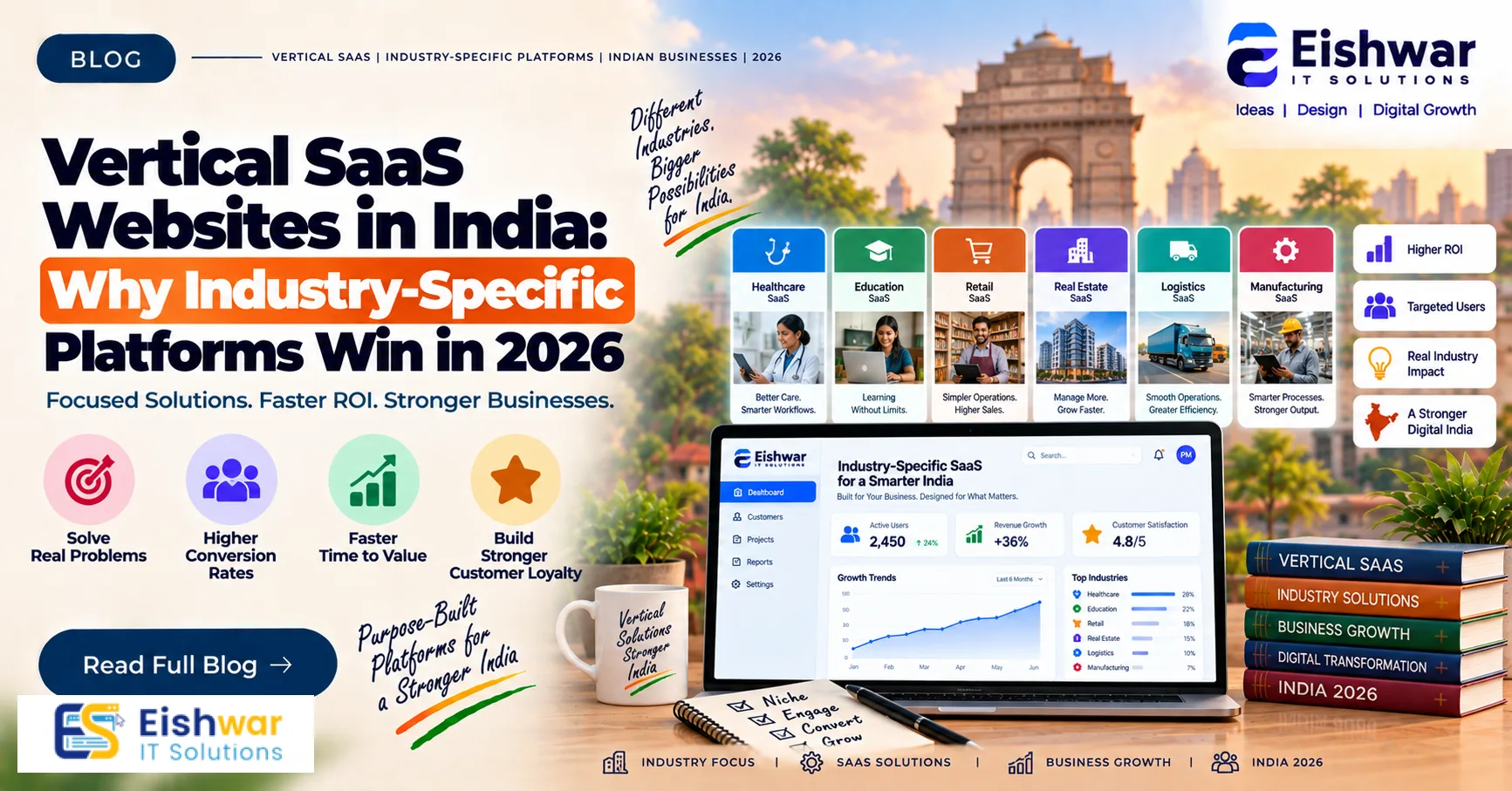
Vertical SaaS Websites in India: Why Industry-Specific Platforms Win in 2026
Introduction
In 2026, India's digital landscape is more competitive than ever. Businesses are no longer satisfied with one-size-fits-all solutions. They need platforms that understand their industry's unique challenges, compliance requirements, and customer behaviors. Enter vertical SaaS—software-as-a-service built specifically for a single industry, from healthcare to logistics to real estate. Unlike horizontal SaaS (think generic CRM or project management tools), vertical SaaS websites offer tailored workflows, specialized features, and industry-specific integrations. This shift is transforming how Indian businesses operate, market, and scale.
Learn more about our Website services
At EishwarITSolution, we've seen firsthand how industry-specific websites—especially those powered by vertical SaaS—drive higher engagement, better SEO, and more conversions. In this guide, we'll explore why vertical SaaS is winning in India, how to leverage it for your business, and what the future holds.
Main Section 1: What is Vertical SaaS and Why It's Booming in India
Defining Vertical SaaS
Vertical SaaS is a software solution designed for a specific industry, such as healthcare, legal, hospitality, or manufacturing. It goes beyond generic features to address niche pain points—like appointment scheduling for clinics, compliance tracking for law firms, or inventory management for restaurants. In contrast, horizontal SaaS serves multiple industries with broad functionalities.
To put it simply, think of horizontal SaaS as a Swiss Army knife—it does many things but none perfectly for your industry. Vertical SaaS is like a specialized surgical tool—it's designed for one purpose and excels at it. For example, a generic CRM might track leads, but a vertical SaaS for real estate can also manage property listings, automate RERA compliance, and calculate brokerage commissions automatically.
Why India is Embracing Vertical SaaS
India's diverse industries have unique regulatory, linguistic, and operational needs. Vertical SaaS platforms cater to these nuances, making them more valuable than generic tools. For example:
- Healthcare: Platforms like Practo (though not pure SaaS) show how industry-specific features—like e-prescriptions and telemedicine—are essential. A vertical SaaS for clinics can integrate with diagnostic labs, send automated appointment reminders via WhatsApp, and maintain electronic health records (EHR) that comply with India's digital health mission.
- Real Estate: Solutions that integrate with RERA compliance and local property laws are gaining traction. For instance, a vertical SaaS can automatically generate RERA-compliant project updates, track buyer registrations, and manage escrow accounts—all in one dashboard.
- Education: Admission management, fee collection, and parent communication tools are must-haves for schools. A vertical SaaS for educational institutions can handle everything from online entrance tests to generating report cards, while also sending fee payment reminders via SMS and email.
Moreover, India's startup ecosystem is fueling vertical SaaS innovation. According to a 2025 report by NASSCOM, vertical SaaS startups in India raised over $2.3 billion in funding, a 45% increase from 2023. This investment is driving better products, more localized features, and aggressive pricing. For example, startups like Zoho (though horizontal) have spawned vertical offshoots, while new players like MediBuddy (healthcare) and NoBroker (real estate) are proving the model works.
Actionable Tip: If you're a business owner, evaluate your current software stack. Are you using generic tools that force workarounds? Consider switching to a vertical SaaS platform that aligns with your industry's workflow. Start by listing your top three operational bottlenecks and see if a vertical solution addresses them directly.
👉 Don't wait for the perfect moment; turn your vision into reality today.
Free ConsultationMain Section 2: How Vertical SaaS Websites Enhance SEO and User Experience
SEO Benefits of Industry-Specific Websites
Vertical SaaS websites are inherently more SEO-friendly because they target specific keywords and user intents. For instance, a legal SaaS website can optimize for "legal case management software India" rather than just "SaaS software." This specificity leads to higher conversion rates and better search rankings.
Industry-specific websites also tend to have better content relevance, internal linking, and schema markup—all factors Google rewards. For example, a healthcare SaaS website can use medical schema to appear in rich snippets, boosting click-through rates. Similarly, a logistics SaaS can use FAQ schema to answer common queries like "how to track shipments in India" directly in search results.
Let's break down the SEO advantages:
- Lower Competition: Generic keywords like "CRM software" have high competition and low conversion rates. Industry-specific keywords like "CRM for dental clinics India" have less competition but attract highly qualified leads.
- Higher Relevance: When your website content matches the user's industry, search engines see it as more relevant. This improves your quality score and ranking.
- Better Content Opportunities: You can create in-depth guides, case studies, and tutorials that address niche pain points. For example, a vertical SaaS for restaurants can publish "How to manage food delivery during peak hours"—content that resonates with your audience.
To maximize SEO, ensure your vertical SaaS website includes:
- Industry-specific landing pages for each service or feature.
- Blog posts that answer common industry questions.
- Structured data (schema markup) for products, reviews, and FAQs.
- Local SEO optimization, especially if you serve specific cities or regions.
User Experience (UX) That Converts
Vertical SaaS platforms are designed with the end-user in mind. A construction management SaaS, for example, will have a dashboard that shows project timelines, material costs, and compliance deadlines—all in one place. This reduces cognitive load and improves productivity.
Moreover, these websites often include industry-specific language and visuals that resonate with the target audience. A hospitality SaaS website might feature high-quality images of hotels and restaurants, while a manufacturing SaaS site would showcase factory floors and machinery. This visual alignment builds trust and credibility.
Here are some UX best practices for vertical SaaS websites:
- Simplify Navigation: Use industry terminology in menus and buttons. For instance, a legal SaaS might have a menu item called "Case Management" instead of "Projects."
- Personalize Dashboards: Allow users to customize their dashboard with widgets relevant to their role. A hospital administrator might want to see patient flow, while a doctor wants appointment schedules.
- Mobile-First Design: With over 70% of web traffic in India coming from mobile, ensure your vertical SaaS website is fully responsive. Test on various devices and screen sizes.
- Reduce Friction: Minimize the number of clicks to complete tasks. For example, a logistics SaaS should allow users to book a shipment in three steps, not ten.
Actionable Tip: When designing your industry-specific website, focus on the user journey. Map out the tasks your users need to complete and design your interface to streamline those tasks. This not only improves UX but also reduces bounce rates. Conduct user testing with actual industry professionals to get feedback.
👉 Free Website Audit
Get Free AuditMain Section 3: Implementing Vertical SaaS in Your Business: A Step-by-Step Guide
Step 1: Identify Your Industry's Pain Points
Before choosing a vertical SaaS, list the top 5 challenges your business faces. Are you struggling with lead management? Compliance? Inventory? Your solution should address these directly. For example, if you run a chain of gyms, your pain points might be member retention, class scheduling, and payment collection. A vertical SaaS for fitness centers would offer features like automated membership renewals, class booking apps, and integration with wearable devices.
To identify pain points, conduct interviews with your team, survey your customers, and analyze your operational data. Look for repetitive tasks that consume time, errors that occur frequently, and areas where you lack visibility.
Step 2: Evaluate SaaS Providers
Look for providers that offer:
- Industry-specific integrations (e.g., payment gateways popular in your sector like Razorpay for e-commerce or Paytm for small businesses)
- Scalability for future growth—can the platform handle an increase in users, transactions, or data volume?
- Strong customer support with industry knowledge—support agents who understand your industry's jargon and challenges.
- Data security and compliance with Indian regulations (e.g., DPDP Act 2023, IT Act, and industry-specific rules like IRDAI for insurance)
Create a checklist and score each provider. Ask for demos and trial periods. Don't just look at features—evaluate the user experience, onboarding process, and training resources.
Step 3: Customize and Migrate
Work with your SaaS provider to customize the platform to your exact needs. This might involve configuring workflows, setting up user roles, integrating with existing tools, and branding the interface. Plan a migration strategy that minimizes downtime. Here's a simple migration plan:
- Audit current data: Identify what data needs to be migrated and clean it up.
- Map data fields: Ensure that fields in your old system correspond to the new platform's structure.
- Test migration: Run a pilot migration with a small dataset to identify issues.
- Execute migration: Move data during off-peak hours to minimize disruption.
- Train your team: Provide comprehensive training sessions and create user manuals.
Step 4: Optimize Your Website for SEO
Once your vertical SaaS website is live, focus on SEO:
- Conduct keyword research using tools like Google Keyword Planner or SEMrush to find industry-specific terms. Look for long-tail keywords with high intent, such as "best hospital management software in India" or "GST filing software for chartered accountants."
- Create content that answers your customers' questions. This could include blog posts, how-to guides, case studies, and video tutorials.
- Implement technical SEO best practices—fast loading, mobile optimization, and secure HTTPS. Use tools like Google PageSpeed Insights to identify areas for improvement.
Actionable Tip: Use your industry's jargon naturally in your content. This signals relevance to both users and search engines. For example, if you're a vertical SaaS for agriculture, use terms like "crop yield," "soil health," and "monsoon forecasting" in your content.
👉 Free Homepage Demo
Book DemoExpert Tips
- Leverage Local SEO: For Indian businesses, optimize for location-based searches like "best legal SaaS in Mumbai." Use Google My Business and local directories. Include your city and state in title tags, meta descriptions, and content.
- Invest in Content Marketing: Publish case studies, whitepapers, and blog posts that showcase your industry expertise. This builds authority and attracts organic traffic. For example, a vertical SaaS for logistics can publish a whitepaper on "Reducing Last-Mile Delivery Costs in Tier-2 Cities."
- Prioritize Mobile-First Design: With over 70% of web traffic in India coming from mobile, ensure your vertical SaaS website is fully responsive. Test on various devices and screen sizes.
- Integrate Analytics: Use tools like Google Analytics and Hotjar to track user behavior and continuously improve your website. Set up goals to measure conversions, such as sign-ups, demo requests, or purchases.
- Build Community: Create a community around your product, such as a Facebook group or LinkedIn community, where users can share tips and best practices. This fosters loyalty and provides valuable feedback.
Common Mistakes
- Ignoring User Feedback: Don't assume you know what your users want. Conduct surveys and usability tests. For example, a vertical SaaS for salons might discover that users want a simpler booking flow, not more features.
- Overcomplicating Features: Too many features can overwhelm users. Focus on the core functionalities that solve your industry's biggest problems. Prioritize quality over quantity.
- Skipping SEO from the Start: Don't treat SEO as an afterthought. Build it into your website architecture from day one. This includes using descriptive URLs, proper header tags, and keyword-rich content.
- Neglecting Security: Industry-specific data is often sensitive. Ensure your SaaS provider complies with data protection laws. Implement two-factor authentication, encryption, and regular security audits.
- Underestimating Onboarding: A complex onboarding process can lead to high churn. Provide interactive tutorials, onboarding checklists, and dedicated support during the first few weeks.
Future Trends
AI-Powered Vertical SaaS
Artificial intelligence will become deeply embedded in vertical SaaS platforms. For example, AI can predict patient no-shows in healthcare or forecast equipment failures in manufacturing. These intelligent features will make industry-specific websites even more indispensable. In 2026, expect AI to be a standard feature, not a differentiator. For instance, a vertical SaaS for retail can use AI to optimize inventory levels based on seasonal demand and local trends.
Voice Search Optimization
As voice search grows in India, vertical SaaS websites must optimize for conversational queries. For instance, a legal SaaS site might target "best divorce lawyer near me" or "how to file GST online." This requires using natural language in content and implementing schema markup for voice search. Also, consider creating FAQ pages that directly answer voice queries.
Hyper-Personalization
Vertical SaaS will leverage data to deliver personalized experiences. A financial SaaS platform could show tailored investment options based on a user's risk profile and past behavior. Personalization can also extend to the website experience—showing different content based on the user's role, industry, or location.
FAQs
1. What is the difference between vertical and horizontal SaaS?
Vertical SaaS is designed for a specific industry, offering tailored features and workflows, while horizontal SaaS serves multiple industries with generic functionalities. For example, Salesforce is horizontal, while a specialized CRM for real estate agents is vertical.
2. How can vertical SaaS improve my website's SEO?
Vertical SaaS websites naturally target industry-specific keywords, which have lower competition and higher conversion intent. They also allow for better content structuring and schema markup, boosting search visibility.
3. Is vertical SaaS more expensive than horizontal SaaS?
Typically, vertical SaaS has a higher upfront cost due to specialized features, but the ROI is often better because it reduces the need for customizations and increases efficiency.
4. Can I switch from a horizontal SaaS to a vertical SaaS?
Yes, but it requires careful planning. Evaluate your current workflows, map them to the vertical SaaS features, and ensure data migration is smooth. Many providers offer migration support.
5. What industries benefit most from vertical SaaS in India?
Healthcare, legal, hospitality, education, manufacturing, and real estate are seeing significant benefits. These industries have complex compliance and operational needs that generic software can't address.
6. How long does it take to implement a vertical SaaS platform?
Implementation time varies depending on the complexity of your needs. A simple setup might take a few weeks, while a full customization with data migration and team training could take 2-3 months. Always plan for a pilot phase.
7. What should I look for in a vertical SaaS provider's customer support?
Look for providers that offer 24/7 support, have industry-specific knowledge, and provide multiple channels (phone, email, chat). Check their response times and read customer reviews.
Conclusion
Vertical SaaS websites are not just a trend—they're the future of digital business in India. By tailoring technology to industry-specific needs, these platforms deliver superior user experiences, better SEO, and higher ROI. Whether you're a healthcare provider, a law firm, or a logistics company, embracing vertical SaaS can set you apart in a crowded market. The key is to choose the right platform, implement it thoughtfully, and continuously optimize based on data and feedback.
CTA
Ready to transform your online presence with an industry-specific website? Contact EishwarITSolution today for a free consultation. Let's build a website that speaks your industry's language and drives real results.