Blockchain IoT for Supply Chain: 2026 Guide for Indian Businesses
Published on: 18 Jun 2026
Blockchain-Enabled IoT for Supply Chain Transparency in India: 2026 Guide
Introduction
Imagine tracking a shipment of mangoes from a farm in Maharashtra to a supermarket in Mumbai—and knowing exactly when it was picked, how it was stored, and whether it was kept at the right temperature. That's the power of blockchain-enabled IoT. In 2026, Indian businesses are increasingly adopting this combination to solve persistent supply chain problems: fraud, counterfeiting, delays, and lack of trust. This guide explains how blockchain and IoT work together to create transparent, tamper-proof supply chains, and how your business can benefit.
Learn more about our Website services
India's supply chain ecosystem is notoriously fragmented. According to a 2025 report by the National Institute of Logistics, nearly 15% of perishable goods are lost due to poor tracking and storage conditions. Blockchain IoT offers a way to plug these leaks. For instance, a dairy cooperative in Gujarat recently reduced spoilage by 30% by using IoT sensors that record temperature data every five minutes onto a blockchain. The immutable record allowed them to pinpoint exactly where the cold chain broke and take corrective action. This is not just about technology—it's about building trust in a system where trust has been scarce.
Moreover, the Indian government's push for digital transformation under the National Blockchain Framework (2023–2027) has made it easier for businesses to adopt these solutions. Subsidies for IoT device deployment and tax incentives for blockchain integration are now available for MSMEs. This guide will walk you through the practical steps to leverage these opportunities.
Main Section 1: What Is Blockchain-Enabled IoT?
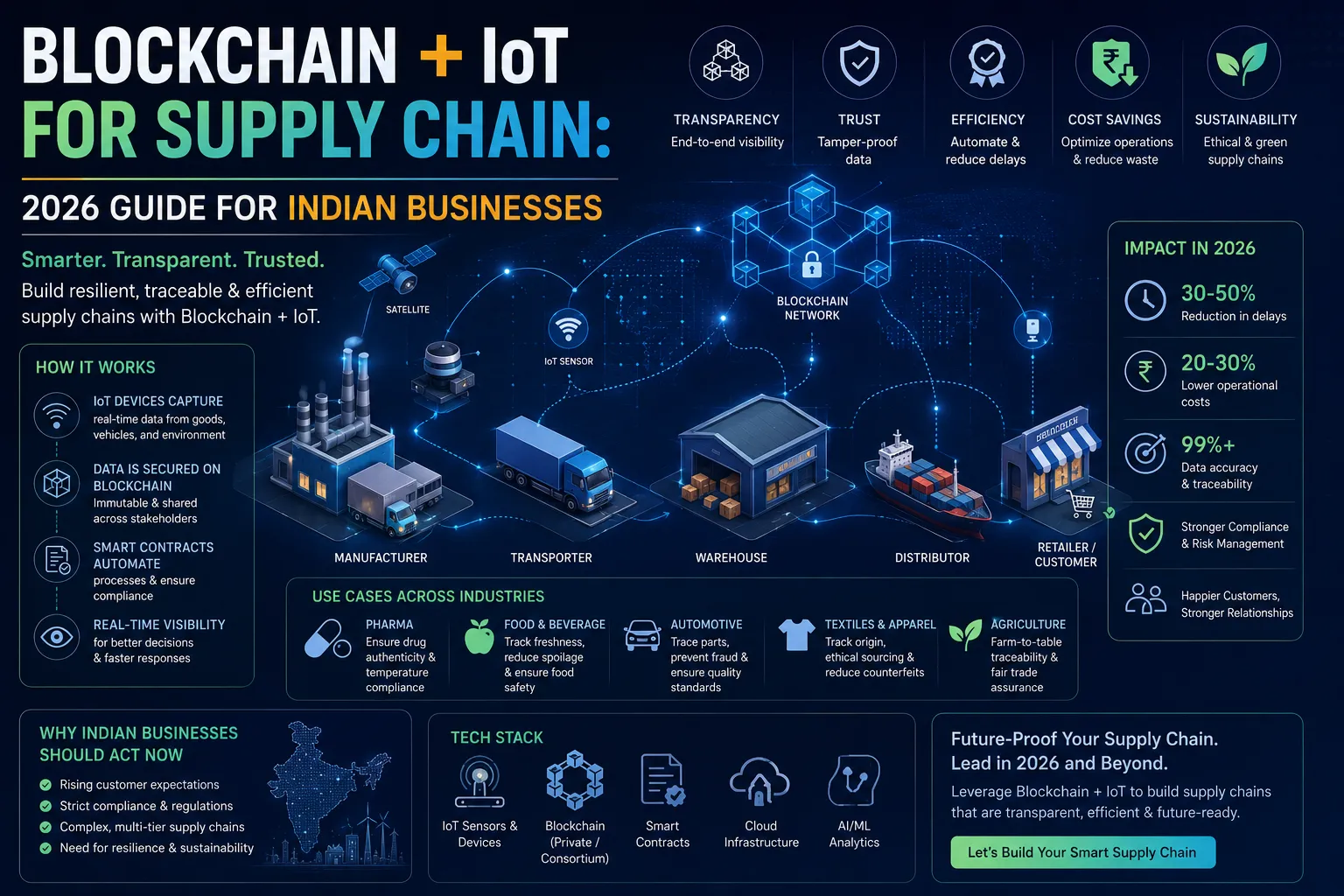
Blockchain is a decentralized digital ledger that records transactions securely. IoT (Internet of Things) refers to physical devices—sensors, GPS trackers, temperature monitors—that collect and share data. When you combine them, IoT devices feed real-time data directly onto a blockchain, where it becomes immutable and verifiable by anyone with permission.
For example, a cold-chain logistics company can place temperature sensors in a container. Every 10 minutes, the sensor logs the temperature to a blockchain. If the temperature goes above 4°C, the record is permanent—no one can delete or alter it. This creates a trustworthy audit trail. But the magic happens when you add smart contracts. Imagine a smart contract that automatically triggers a payment to the farmer if the temperature stays within range, or alerts the buyer if it deviates. This reduces disputes and speeds up transactions.
In India, where supply chains are complex and often involve multiple intermediaries, blockchain IoT can reduce disputes, improve efficiency, and build consumer confidence. For instance, a spice exporter in Kerala uses blockchain IoT to track cardamom from farm to port. Each batch gets a unique digital ID that records harvest date, processing steps, and shipping conditions. Buyers in Europe can scan a QR code to verify the spice's authenticity and quality. This has helped the exporter command a 20% premium over competitors.
One common misconception is that blockchain IoT requires expensive hardware. In reality, many low-cost sensors are now available for under ₹500. Platforms like Hyperledger Fabric offer free tiers for small-scale pilots. The key is to start with a focused use case and scale gradually.
👉 Don't wait for the perfect moment; turn your vision into reality today.
Free ConsultationMain Section 2: Real-World Applications in India
Agriculture and Food Safety
Indian farmers and agri-tech startups are using blockchain IoT to track produce from farm to fork. For instance, a cooperative in Karnataka uses IoT sensors to monitor soil moisture and harvest time, then records each step on a blockchain. Buyers can scan a QR code on the packaging to see the entire journey—including certifications and storage conditions. This reduces food fraud and helps farmers get better prices. In 2025, the cooperative reported a 25% increase in revenue because buyers trusted the traceability data.
Another example is the mango supply chain in Uttar Pradesh. A logistics company deployed GPS and temperature sensors in trucks transporting mangoes to Delhi. The blockchain recorded every stop, temperature fluctuation, and delivery time. When a batch arrived with spoilage, the blockchain data showed that the truck had stopped for three hours in direct sunlight. The logistics provider was held accountable, and the farmer received compensation. This level of transparency was impossible before.
Pharmaceuticals and Healthcare
Counterfeit drugs are a major problem in India. According to the World Health Organization, up to 20% of medicines sold in India may be counterfeit. Blockchain IoT can authenticate medicines at every stage. Sensors in shipping containers monitor temperature and humidity, while blockchain records each handover. If a batch is compromised, it can be traced instantly. Companies like EishwarITSolution are helping healthcare providers implement such systems. For example, a hospital chain in Maharashtra uses blockchain IoT to track vaccines from the manufacturer to the clinic. Each vial has a unique ID, and the blockchain records its storage conditions and handling. This ensures that patients receive only safe, effective vaccines.
In 2026, the Indian government is piloting a national drug traceability system using blockchain IoT. This will require all pharmaceutical companies to tag their products with IoT-enabled QR codes. Early adopters will have a competitive advantage.
Manufacturing and Automotive
Indian automobile manufacturers use blockchain IoT to track spare parts from suppliers to assembly lines. A sensor on a component records its origin, quality checks, and movement. If a defect is found, the blockchain helps pinpoint exactly which batch caused it, enabling faster recalls and reducing waste. For instance, a major car manufacturer in Chennai reduced recall costs by 40% after implementing blockchain IoT. The system also helped them identify a supplier who was consistently delivering substandard parts, leading to a contract termination.
In the textile industry, a garment exporter in Tirupur uses blockchain IoT to track cotton from farm to factory. The blockchain records the cotton's origin, processing chemicals used, and labor conditions. This allows the exporter to prove compliance with international sustainability standards, opening up new markets in Europe and North America.
Main Section 3: How to Implement Blockchain IoT in Your Supply Chain
Start small and scale. Here's a step-by-step approach:
- Identify a pain point—for example, lack of visibility in cold storage. Conduct a cost-benefit analysis to quantify the potential savings. For instance, if you lose 10% of perishable goods due to spoilage, reducing that to 5% could save you lakhs annually.
- Choose the right IoT devices—temperature, humidity, or GPS sensors that fit your product. Consider factors like battery life, data transmission frequency, and cost. For example, a temperature sensor that costs ₹800 and lasts two years is a good investment for a high-value product like pharmaceuticals.
- Select a blockchain platform—Hyperledger Fabric or Ethereum for enterprise use. Hyperledger Fabric is preferred for permissioned networks because it offers faster transaction speeds and better privacy controls. Ethereum is suitable for public, decentralized applications.
- Integrate with existing systems—use APIs to connect ERP or inventory software. Most modern ERPs like SAP and Oracle have blockchain integration modules. If you use a custom system, your IT team or a partner like EishwarITSolution can develop custom APIs.
- Pilot with one product line—test and refine before scaling. Choose a product that has a high value or high risk of fraud. For example, a premium spice or a critical medicine. Run the pilot for 3–6 months and measure key metrics like traceability time, dispute resolution rate, and customer satisfaction.
- Train your team—ensure everyone understands how to use the system. Create simple user guides and conduct hands-on workshops. Involve suppliers and distributors in the training to ensure smooth adoption.
Partner with a technology provider like EishwarITSolution to simplify the process. They offer end-to-end solutions tailored for Indian businesses, including hardware procurement, blockchain development, and integration support. Their team has experience with over 50 supply chain projects across India.
👉 Free Website Audit
Get Free AuditExpert Tips
- Focus on data standardization—use common formats like GS1 standards so all parties can read the data. This is critical for interoperability across different systems and stakeholders.
- Ensure device security—IoT devices can be hacked; use encryption and secure boot. Implement over-the-air (OTA) updates to patch vulnerabilities. Consider using hardware security modules (HSMs) for key storage.
- Involve all stakeholders early—suppliers, distributors, and regulators need to buy in. Hold workshops to explain the benefits and address concerns. For example, a distributor might worry about data sharing; assure them that only relevant data is visible.
- Use permissioned blockchains—for supply chains, private networks are faster and more compliant. Public blockchains like Bitcoin are too slow for high-volume data. Hyperledger Fabric or R3 Corda are better choices.
- Monitor costs—IoT devices and blockchain transactions have fees; plan your budget. For a small pilot, expect costs of ₹2–5 lakh for hardware and ₹1–3 lakh for development. Scale-up costs depend on the number of devices and transactions.
- Leverage government subsidies—Check the Ministry of Electronics and Information Technology (MeitY) for grants under the National Blockchain Framework. Many state governments also offer incentives for digital supply chain projects.
Common Mistakes
- Overcomplicating the technology—start with a simple use case, not a full overhaul. For example, start with temperature monitoring before adding GPS tracking and smart contracts.
- Ignoring data privacy—blockchain is transparent; ensure sensitive data is not exposed. Use private data collections or off-chain storage for confidential information like pricing or customer details.
- Choosing the wrong blockchain—public blockchains may be too slow for high-volume data. For a supply chain with thousands of transactions per day, a permissioned blockchain is essential.
- Underestimating change management—people resist new systems; provide training and support. Create a change management plan that includes communication, training, and incentives for adoption.
- Neglecting regulatory compliance—Indian laws on data storage and cross-border data flow apply. Ensure your solution complies with the Digital Personal Data Protection Act, 2023, and the IT Act, 2000.
- Not testing device reliability—IoT sensors can fail in extreme conditions. Test devices in your specific environment (e.g., high humidity, dust, or temperature extremes) before deployment.
Future Trends
By 2027, we expect blockchain IoT to become standard in Indian logistics. AI will analyze blockchain data to predict disruptions—for example, predicting a cold chain failure based on historical temperature patterns. 5G will enable faster, more reliable IoT data streams, allowing real-time tracking even in remote areas. Smart contracts will automate payments when conditions are met—for example, releasing payment when a shipment reaches a certain location. Government initiatives like Digital India and the National Blockchain Framework will further accelerate adoption.
👉 Free Homepage Demo
Book DemoAnother trend is the integration of blockchain IoT with digital twins—virtual replicas of physical supply chains. This will allow businesses to simulate scenarios and optimize operations. For example, a logistics company could test different routing options to minimize spoilage before actually moving goods.
We also foresee the rise of decentralized autonomous organizations (DAOs) in supply chains. These are organizations governed by smart contracts, where decisions like supplier selection or payment terms are automated based on blockchain data. This could reduce the need for intermediaries and speed up transactions.
FAQs
1. What industries in India benefit most from blockchain IoT in supply chain?
Agriculture, pharmaceuticals, automotive, and food processing see the biggest benefits due to high fraud risk and need for traceability. For example, the pharmaceutical industry loses an estimated ₹4,000 crore annually to counterfeit drugs, making blockchain IoT a high-ROI investment.
2. Is blockchain IoT expensive for small businesses?
Initial costs can be high, but cloud-based solutions and government subsidies in India are making it more affordable. Start with a pilot project. For instance, a small spice exporter can set up a basic system for under ₹1 lakh using low-cost sensors and a cloud-based blockchain platform.
3. How does blockchain ensure data from IoT devices is accurate?
Data is cryptographically signed by the device and recorded immutably. However, device calibration and security are crucial to prevent faulty data. Regular calibration checks and tamper-proof hardware can mitigate risks. For example, using sensors with built-in self-diagnostics can alert you if a device is malfunctioning.
4. Can blockchain IoT work offline in rural India?
Yes, some IoT devices store data locally and sync when connected. Hybrid solutions are available for areas with poor internet. For example, a device can store data on a local SD card and upload it to the blockchain when it comes within range of a Wi-Fi or cellular network. This is commonly used in remote farms in Madhya Pradesh.
5. What are the legal considerations in India?
Data must comply with India's Digital Personal Data Protection Act. Blockchain records may be considered electronic evidence under the IT Act. Additionally, cross-border data flow restrictions apply if your supply chain involves international partners. Consult a legal expert to ensure compliance.
6. How long does implementation take?
A pilot can be set up in 4–8 weeks. Full-scale deployment may take 6–12 months depending on complexity. Factors like number of stakeholders, integration with legacy systems, and regulatory approvals can affect the timeline.
7. What is the role of EishwarITSolution in this?
EishwarITSolution provides end-to-end consulting, development, and integration services for blockchain IoT solutions tailored to Indian businesses. They offer a free initial assessment to identify your pain points and recommend a pilot plan. Their team has expertise in Hyperledger Fabric, Ethereum, and various IoT hardware platforms.
8. How do I convince my management to invest in blockchain IoT?
Start by quantifying the potential savings. For example, if you lose 10% of perishable goods due to spoilage, calculate the annual loss. Then, estimate the cost of a pilot and the expected reduction in spoilage. Present a business case with a clear ROI timeline. Many Indian companies have seen payback periods of 12–18 months.
9. What are the security risks of blockchain IoT?
Key risks include IoT device hacking, data tampering during transmission, and smart contract vulnerabilities. Mitigate these by using encrypted communication, secure boot for devices, and regular security audits. Partnering with a reputable provider like EishwarITSolution can help address these risks.
Conclusion
Blockchain-enabled IoT is not just a buzzword—it's a practical tool for Indian businesses to build trust, reduce fraud, and improve efficiency in supply chains. By starting small, choosing the right technology, and partnering with experts, you can gain a competitive edge in 2026 and beyond. The examples from agriculture, pharmaceuticals, and manufacturing show that the benefits are real and measurable. With government support and falling costs, there has never been a better time to adopt this technology. Don't wait for your competitors to leap ahead—start your blockchain IoT journey today.
CTA
Ready to transform your supply chain with blockchain IoT? Contact EishwarITSolution today for a free consultation and pilot plan tailored to your business needs. Our experts will help you identify the best use case, select the right technology, and guide you through implementation. Take the first step toward a transparent, efficient, and trustworthy supply chain.