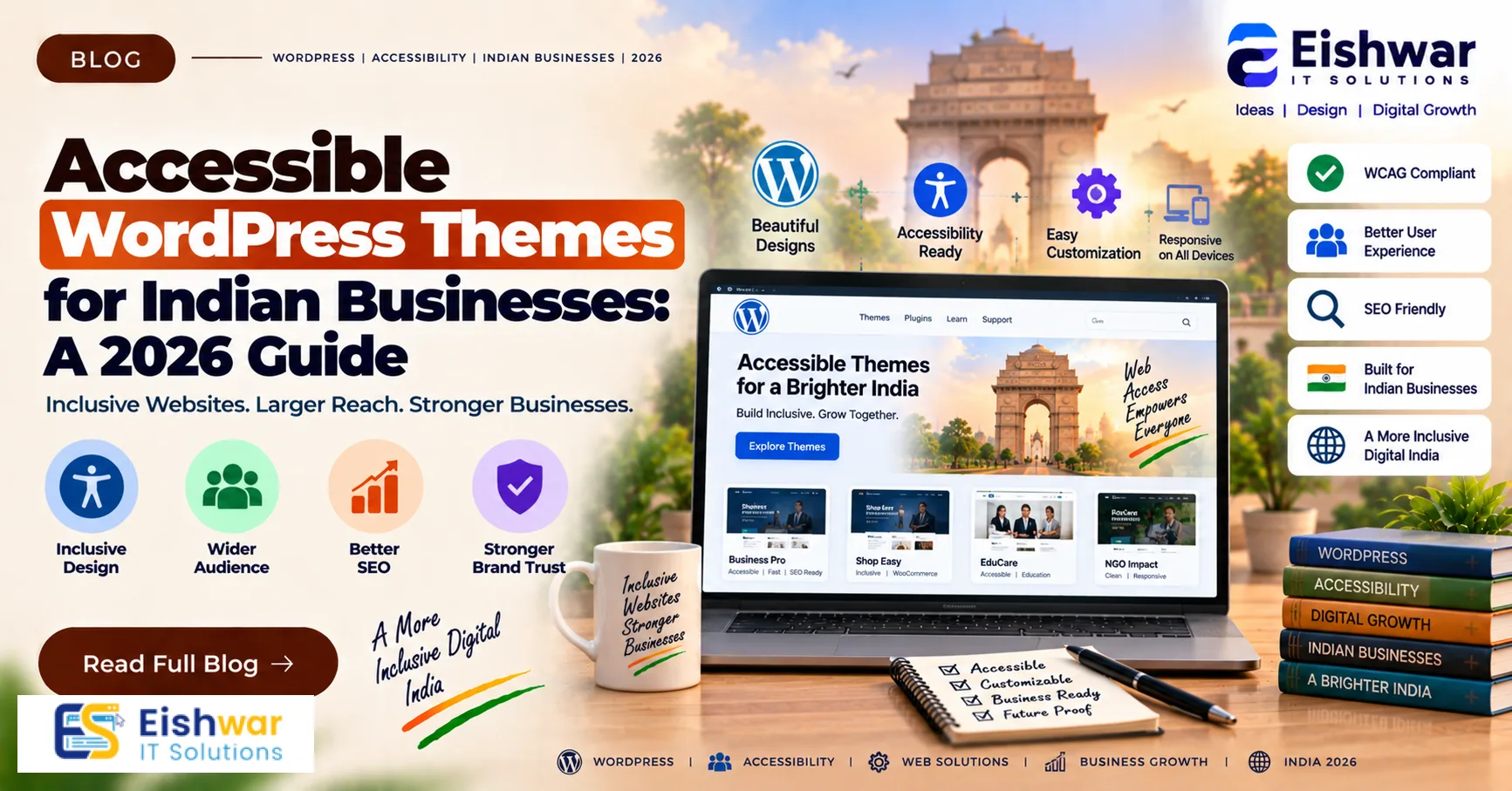
Accessible WordPress Themes for Indian Businesses: A 2026 Guide
Published on: 14 Aug 2026
Accessible WordPress Themes for Indian Businesses: A 2026 Guide
Introduction
Imagine losing a customer because they couldn't navigate your website. For millions of Indians with disabilities, this is a daily reality. As we move into 2026, web accessibility is no longer optional—it's a competitive advantage and a legal requirement under the Rights of Persons with Disabilities Act, 2016. For Indian businesses using WordPress, the theme you choose sets the foundation for accessibility. This guide will help you select a theme that not only looks good but also works for everyone.
Learn more about our Website services
In India, the digital landscape is booming, with over 700 million internet users, and among them, a significant number live with disabilities—visual, auditory, motor, or cognitive. When your website is inaccessible, you're not just excluding them; you're losing potential customers and revenue. Moreover, Google prioritizes accessible sites in search rankings, so accessibility directly impacts your SEO. In 2026, expect stricter enforcement of accessibility standards globally, and Indian businesses that comply will have a competitive edge. Beyond compliance, accessible design improves user experience for everyone: faster load times, clearer navigation, and better mobile usability. It also enhances your brand image as inclusive and socially responsible, which resonates strongly with Indian consumers who value community and care.
Main Section 1: Why Accessibility Matters for Indian Businesses
India has over 70 million people with disabilities, and many are online. This is not a niche audience—it's a substantial market segment that is often overlooked. Consider this: a visually impaired user might use a screen reader to browse your site. If your theme lacks proper heading structure or ARIA labels, they'll encounter a confusing mess of content. A user with motor impairments might rely solely on keyboard navigation. If your theme doesn't support tabbing through menus and forms, they'll be stuck. These users are not just visitors; they are potential customers, clients, and advocates for your brand.
The legal landscape is also shifting. The Rights of Persons with Disabilities Act, 2016, mandates that all public and private websites be accessible. While enforcement has been gradual, 2026 is set to see more rigorous checks, especially for businesses with an online presence. Non-compliance could lead to penalties, but more importantly, it could lead to public backlash and loss of trust. On the flip side, businesses that proactively embrace accessibility will stand out as leaders in corporate social responsibility.
Accessibility also dovetails with SEO. Search engines like Google use crawlers that mimic assistive technologies. A site with clear headings, descriptive alt text, and logical navigation is easier for crawlers to index, which can boost your rankings. Moreover, accessible sites tend to have lower bounce rates because users find what they need quickly. In a mobile-first country like India, where many users access the internet via low-end smartphones, accessibility features like responsive design and fast loading are critical. By prioritizing accessibility, you're also optimizing for performance, which benefits all users, regardless of ability.
Main Section 2: Top Accessible WordPress Themes for 2026
Here are some of the best accessible themes that are also popular among Indian businesses:
👉 Don't wait for the perfect moment; turn your vision into reality today.
Free Consultation- GeneratePress – Lightweight, fast, and built with accessibility in mind. Works well with page builders and supports RTL languages, which is crucial for Hindi, Tamil, and other regional scripts. Its modular design lets you enable only what you need, keeping the code clean and accessible.
- Astra – Highly customizable, offers ready-made templates, and is WCAG-ready with proper heading structure and keyboard navigation. Astra integrates seamlessly with popular page builders like Elementor and Beaver Builder, making it easy for non-developers to create accessible layouts. It also offers extensive color options to ensure contrast ratios meet standards.
- Neve – A minimalist theme that loads quickly and is compatible with accessibility plugins. Great for small businesses that want a professional look without bloat. Neve's mobile-first approach ensures that accessibility is maintained on all devices, which is essential in India's mobile-dominated internet usage.
- Kadence – Offers advanced accessibility features like skip links, focus styles, and ARIA landmarks. Kadence also provides a range of starter templates that are pre-tested for accessibility, saving you time. Its typography controls allow you to adjust font sizes and line heights for better readability.
- Customizr – A free theme that is responsive and accessible, ideal for startups on a budget. Customizr includes built-in options for customizing colors, fonts, and layouts, all while maintaining accessibility. It's a great starting point for businesses that need a professional site without a hefty investment.
When choosing a theme, check its accessibility statement, demo with a screen reader, and test keyboard navigation. Also, look at the theme's update history—regular updates indicate ongoing maintenance and commitment to standards. Don't rely solely on the theme's marketing; use tools like WAVE or axe to verify claims.
Main Section 3: Key Features to Look For
Not all themes labeled 'accessible' are equal. Here’s what to check:
- Semantic HTML – Proper use of headings, lists, and landmarks. This ensures that screen readers can interpret the structure of your page correctly. For example, headings should be in a logical order (h1, then h2, etc.) without skipping levels.
- Keyboard Navigation – All functions usable via keyboard. Test that you can tab through menus, links, and forms without getting stuck. Focus indicators should be visible, so users know where they are.
- Color Contrast – Meets WCAG AA standards (4.5:1 for normal text). This is especially important for users with low vision. Use tools like Contrast Checker to verify that your theme's default colors meet these ratios.
- Skip Links – Allow users to jump to content. These are particularly helpful for keyboard users who don't want to tab through every navigation link each time they load a page.
- ARIA Labels – For dynamic content and forms. ARIA (Accessible Rich Internet Applications) labels provide additional context to screen readers, such as describing the purpose of a form field or the state of a menu.
- Responsive Design – Works on all devices, which is crucial in mobile-first India. Ensure that the theme's layout adapts gracefully to different screen sizes without losing functionality.
Also, consider themes that integrate with popular accessibility plugins like WP Accessibility or One Click Accessibility. These plugins can add features like font size adjusters, high-contrast modes, and skip-to-content links, but they should not be a substitute for a theme that is inherently accessible. A good theme will have a solid foundation, and plugins can enhance it further.
👉 Free Website Audit
Get Free AuditExpert Tips
1. Test, Don’t Assume – Use tools like WAVE or axe to test your theme’s accessibility. These tools will highlight issues such as missing alt text, low contrast, or improper heading structure. Run these tests on every page, not just the homepage, as different templates may have different issues.
2. Use a Child Theme – This ensures your customizations don’t break accessibility when the parent theme updates. Child themes allow you to modify code without affecting the original theme, so you can safely add custom CSS or functions without fear of losing changes during updates.
3. Combine with an Accessibility Plugin – Even the best theme benefits from a plugin to add features like font size adjusters. However, be selective—too many plugins can slow down your site and introduce conflicts. Choose plugins that are well-maintained and have good reviews.
4. Hire an Expert – If you’re unsure, get a professional accessibility audit. An expert can identify issues that automated tools might miss, such as complex interactive elements or dynamic content that needs manual testing. They can also provide recommendations tailored to your specific business needs.
5. Involve Users with Disabilities – The best way to test accessibility is to involve real users. Conduct usability testing with people who have disabilities to get firsthand feedback. This can reveal issues that you might not have considered, such as the need for alternative text for complex images or the importance of clear error messages in forms.
Common Mistakes
– Ignoring Mobile Accessibility – Many themes are responsive but not truly accessible on mobile. For example, touch targets might be too small, or the keyboard navigation might not work smoothly on mobile browsers. Test your site on various devices and screen sizes to ensure accessibility is maintained.
– Overloading with Plugins – Too many plugins can slow down your site and introduce accessibility issues. Each plugin adds code that can interfere with the theme's accessibility features. Stick to essential plugins and regularly review your plugin list to remove any that are no longer necessary.
– Neglecting Content – Even an accessible theme can’t fix inaccessible content like images without alt text. Ensure that all images have descriptive alt text, videos have captions, and documents are in accessible formats. Train your content team on accessibility best practices.
– Skipping Regular Updates – Accessibility standards evolve; keep your theme and plugins updated. Outdated themes may have known accessibility issues that have been fixed in newer versions. Set a schedule to check for updates and apply them promptly.
– Assuming Accessibility is a One-Time Task – Accessibility is an ongoing commitment. As you add new content, features, or redesign pages, you need to test again. Make accessibility part of your development workflow, not an afterthought.
Future Trends
In 2026, expect more themes to integrate AI-driven accessibility features, such as automatic alt text generation and real-time contrast adjustments. Voice navigation will become standard, and we’ll see more regional language support, crucial for India’s diverse population. Additionally, as WCAG 3.0 drafts progress, themes will need to adapt to new standards, which may include more stringent requirements for color contrast and cognitive accessibility.
👉 Free Homepage Demo
Book DemoAnother trend is the rise of inclusive design systems that consider accessibility from the start, rather than retrofitting it later. Themes will likely come with built-in accessibility checkers that alert you to issues as you build your site. We'll also see more integration with assistive technologies like braille displays and eye-tracking devices, making the web more accessible for users with severe disabilities.
For Indian businesses, this means staying ahead of the curve by choosing themes that are future-proof. Look for themes that are actively developing new features and have a roadmap for accessibility. The ones that embrace these trends will not only meet legal requirements but also capture a larger share of the market.
FAQs
What is the best accessible WordPress theme for a small Indian business?
Are free WordPress themes accessible?
How do I test if my WordPress theme is accessible?
Can I make an inaccessible theme accessible?
Do accessible themes affect website performance?
What are the legal requirements for web accessibility in India?
Conclusion
Choosing an accessible WordPress theme is a smart investment for your Indian business. It expands your audience, improves SEO, and builds a positive brand reputation. Start with the themes we’ve listed and always test before you commit. Remember, accessibility is not a one-time task but an ongoing commitment. By prioritizing it, you're not only complying with the law but also showing that you value all your customers. In 2026, accessibility will be a differentiator that sets your business apart.
CTA
Ready to make your website accessible to all? Contact EishwarITSolution today for a free accessibility audit and expert guidance on choosing the perfect theme for your business. Our team of experts will help you navigate the complexities of web accessibility, ensuring your site is inclusive, compliant, and optimized for success. Don't wait—take the first step towards a more accessible future now.